UPDATE ON THE ARTS FEBRUARY – JUNE 2026
This time period was a great reading period for me. I read (and largely enjoyed) nineteen new novels in the period, including several that I suspect will be on my ‘best of 2026’ list.
I also found time to attend seven sessions at the Auckland Writers’ Festival over one weekend in May, and ten sessions of the French Film Festival during June. This is the first time in seven years that I have been able to attend these festivals (as I have always been overseas) so attending them in 2026 was an absolute delight.
BOOKS
As usual, I’ll discuss the books in alphabetical order, by author:
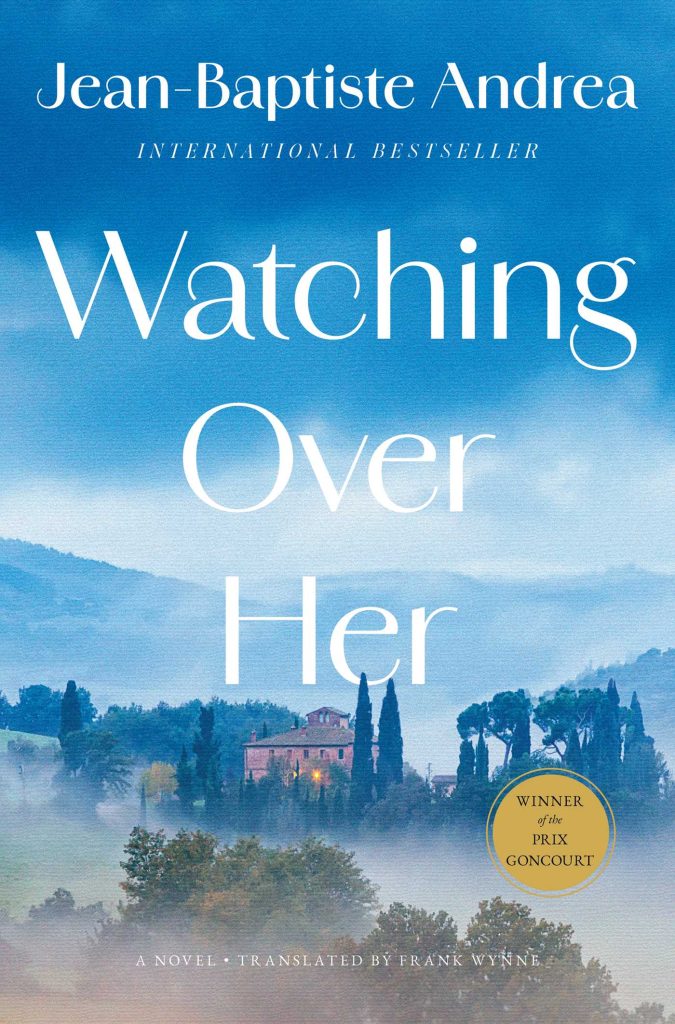
Watching Over Her by Jean-Baptiste Andrea (translated from French by Frank Wynne). This sprawling novel, winner of the Prix Goncourt in 2023 but only just translated into English, is extraordinary. Above all, it is a ‘celebration’ of Italy from 1904 to 1986, from the beginnings of fascism to the emergence of democracy and it is told almost in the tradition of Italian cinema. Think of Fellini’s Amarcord meeting De Sica’s Garden of the Finzi-Contini. Told largely by its central character – Mimo Vitaliani, a celebrated sculptor born a dwarf (“not tall, strong and handsome but short, strong and handsome”) in France, but of Italian parents – it traverses all key events of twentieth-century Italy, whether they be related to politics, culture, social change, economics or even the church. Mimo is at the centre of it all. But it is more than a sprawling historical tale. It is also Mimo’s personal journey of discovery – from his (and others’) realisation that he is an extraordinarily talented sculptor, to his patronage by the wealthy Orsini family, to (most importantly) his beautiful and deep relationship with his muse Viola Orsini who he is destined to ‘watch over’. We eventually learn, in fact, that she is the subject of his most important work, the Pieta that depicts the Virgin Mary ‘watching over’ the Christ. Andrea is a great story-teller and builder of characters and he had me totally engaged in his tale – fictional but based on fact – from beginning to end. I highly recommend this novel.
The Daffodil Days by Helen Bain. This novel ultimately disappointed me. From the reviews, it showed so much promise – a fictionalisation of the last year of Sylvia Plath’s life, an exploration of her marriage to Ted Hughes, and a depiction of rural English life in the early 1960s. Chapter One (Plath leaving her Devon home for a return to London) totally engaged and moved me. Knowing that Plath was to take her own life just a month after her departure from Devon, I was deeply moved to read of her housekeeper thinking that Plath would want to use her new washing machine “the minute she gets back”, knowing that would not get back. So why did the novel, beautifully written as it is, not work for me? I liked the fact that it was written from multiple perspectives – from the local doctor attending to a medical emergency involving Plath, to a shop assistant helping Plath choose a new outfit, to a BBC producer reflecting on a planned abortion as she helps Plath deliver a talk, to well documented arguments with a range of her friends – but characters came and went too quickly and some added little to my understanding of Plath the woman or the poet. The author’s decision to deliver the narrative backwards (chapter by chapter, it moves from December 1962 to July 1961) frustrated me. One only learnt the outcome of many events or what happened to many of the characters by thinking back to the content of previous chapters. I’m sure I would have been more engaged if the novel had been written with a forward thrust. And I don’t think I knew enough of Plath’s life or work to appreciate the novel fully. A reading of reviews has indicated to me that many allusions to her poetry are contained within the narrative, but they mainly escaped me. By the end of the novel, I felt that I had not learnt what I was expecting to learn about Plath the woman or the writer. Yes, it was a beautiful depiction of the context in which Plath and Hughes lived, but that was not enough for me. Perhaps if I’d been an aficionado of Plath, I’d have got more out of the novel.
The Nights Are Quiet in Tehran by Shida Bazyar (translated from German by Ruth Martin). This multi-generational novel, that traces an Iranian family from the 1979 Revolution to the Green Revolution of 2009, is quietly powerful. ‘Powerful’ because it depicts an upheaval in the Middle East that is still affecting the world, but ‘quietly’ because it explores this upheaval largely through a domestic lens. In 1979, Behzad (who is to become the father of the family) excitedly anticipates the emergence of a socialist society now that the Shah has been overthrown; in 1989, Behzad and his wife Nahid are political exiles in Western Germany, wondering what went wrong and trying to make sense of their exiled lives; in 1999, Nahid and her daughters are visiting Tehran trying to enjoy its busy life but recognising the political and social tensions that lie underneath; in 2009, Behzad and Nahid’s son is enjoying university life in Germany but becoming aware of the tensions emerging in his homeland as fresh political struggles take place. And in a very short epilogue, we learn of what might happen to Tehran in the future. But, who knows, as we can see in today’s world. I found the content of this novel fascinating, not least because of its depiction of the streets and smells of Tehran amidst political and social turmoil and anticipation. I read it because it had been short-listed for the International Booker Prize for 2026 and was so pleased I did.
Lazar by Nelio Biedermann (translated from German by Jamie Bulloch). I really enjoyed this family saga depicting the lives of three generations of a Hungarian aristocratic family, beginning from the dying throes of the Austro-Hungarian Empire in the early 1900s, through two world wars and all that they meant for Hungary (especially the plight of Hungarian Jews in World War Two), and culminating in the defeat of the Hungarian National Uprising against communism in 1956. We learn not only about the outer and inner lives of the three generations – obsessed with status and literature – but also about the historical events that contextualise their lives. Knowing little about Hungarian history, I found this interesting. It also fascinated me that the Swiss-born author was only 21 when he wrote the novel, and his own Hungarian heritage (his paternal grandparents fled Budapest for Zurich in 1956) suggests an exploration of some aspects of his own family history within it. What talent and potential for one so young! But despite my enjoyment of the novel, there was something that held me back. Its move from magical realism to full realism did not bother me, but its very short chapters (some just 1-2 pages and many less than 5 pages) depicting the actions of a large cast of characters made me feel as if I was looking at a series of snap-shots rather than full photographs from time to time. Despite this, however, it was a very enjoyable read and I look forward to the young writer’s next novel. Being so young, he is yet to complete his studies at the University of Zurich!!

The Correspondent by Virginia Evans. This is a beautiful novel that moved me very much. It does not surprise me that it won the prestigious Women’s Fiction prize for 2026. It is an epistolary novel, told entirely through letters, notes and e-mails, written principally by the main character Sybil Van Antwerp. Most messages are to her friends, family and acquaintances – to her best friend Rosalie, to her brother Felix, to her children Fiona and Bruce, to her two beaux Theodore and Lance, to the troubled son of an ex-colleague, to a person stalking her for a mistake she made as a lawyer, and (most movingly) to members of a new-found family. Others are to large organisations, such as a university and a genealogical corporation. And, most interestingly, some are to real writers (such as Ann Patchett, Kazuo Ishiguro and Joan Didion) that she feels connected to. Letter-writing is Sybil’s life. Written toward the end of her life (from age 72 to 80), she navigates issues of grief, regret, love, redemption and her impending blindness through her messages along with some replies. We get to know her so intimately through the letters and responses – at times she is irascible and even unlikeable, but we get to learn why this is. Her various stories are engrossing and I couldn’t to find out how they were resolved. The Correspondent is Evans’ first novel; I look forward to her next.
The Wilderness by Angela Flournoy. To me, this acclaimed novel (short-listed for the 2025 National Award in the US) was a novel of two halves. Exploring and depicting the lives, loves and inter-relationships between four contemporary Afro-American female friends from their mid-20s to midlife, I felt that I was possibly the wrong reader for this beautifully written text. I found it difficult to engage in the detailed depictions of their lives and I could not see where the novel was heading. But the final 100 pages not only hooked me but became real page-turners for me. Suddenly, we were in the near future (2027) and although Trump’s name was not actually mentioned, we (and the main characters) were in a Los Angeles that was ablaze with protest, riots and of course fire. Our four protagonists (Desiree, January, Monique and Desiree’s estranged sister Danielle) had moved from the wilderness of middle America to the hell of contemporary times searching for meaning in their lives. Will they survive? By the end, I was very pleased that I had read this novel.
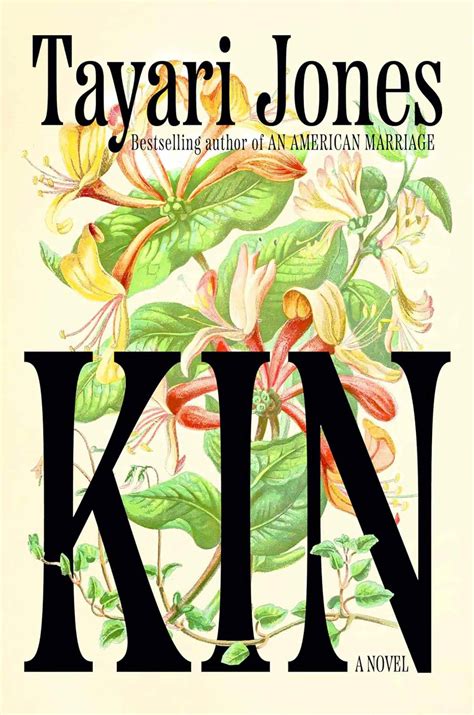
Kin by Tayari Jones. This is a very powerful novel – not quite as powerful (for me) as her pervious novel (An American Marriage) but almost so. Told in the first person in alternate chapters, it is the story of two Afro-American mother-less ‘cradle friends’ – Vernice and Annie – who bonded as babies as they were brought up by neighbouring relatives. They spend their young, adult lives searching for their mothers – physically in the case of Annie (whose mother deserted her as a newborn), and metaphorically in the case of Vernice (whose mother was murdered by Vernice’s father when she was a newborn). It explores the concept of kinship in all its forms – kinship by blood and (more importantly) kinship by choice. Set in the Deep South in the 1950s and 60s, it crosses between the worst of the Jim Crow era (a key event, generating horrific outcomes, features Vernice accidentally occupying a ‘whites only’ seat on a Greyhound bus) to the beginnings of hope as black activism and Dr King appear and a burgeoning black middle class (to which Vernice aspires) emerges. It depicts the separate lives of both women but also the kinship bonds that tie them together. In doing this, it beautifully and powerfully captures the social, economic and political mores of the context and the times. I loved it.
She Who Remains by Rene Karabash (translated from Bulgarian by Izidora Angel). Set mainly in rural Albania but also in urban Bulgaria, this short novel (146 pages) intrigued me. It almost presented itself as a folk tale, but a very black one at that. Life in rural Albania is governed by the Kanun, a set of beliefs that guide gender roles and behaviours in a patriarchal society. Bekija is born female, but to get herself out of an arranged marriage and move toward the woman she wants to live with, she needs to follow the Kanuni directive of becoming a ‘sworn virgin’ and living her life as a man (Matija). But this decision leads to outcomes that involve murder, betrayal and despair. It is not, however, as bleak as it sounds. Some of it is beautiful and told in very accessible poetry; most of it is Bekijal Matija’s stream of consciousness, as they make sense of their thoughts. experiences and discoveries. I know very little about the Balkans and found it so fascinating to enter a society that was so new to me. I only read the book because it had been short-listed for the 2026 International Booker Prize – and had previously won Bulgaria’s most prestigious literary award – and was so pleased that I did. Near the beginning, I struggled to make sense of some of the content, but this feeling disappeared about a quarter of the way into the novel. If you read it, stick with it.
Look What You Made Me Do by John Lanchester. I thoroughly enjoyed reading this satire of the pretentions of North London middle class life which cleverly and entertainingly encapsulates the saying: Revenge is a dish best served cold. It turns into a battle royal between its two narrators – the baby boomer and bitchy Kate and the millennial and bitter Phoebe – around a hit TV series (called ‘Cheating’) that Phoebe has written, based apparently on Kate and her husband Jack’s marriage. To say more, would be revealing too many spoilers. After a bit of a meandering start, it takes off at a rapid pace and had me ‘having to read the next page/chapter’ to find out what happened. Yes, some of its characters are caricatures and some of its plot points are incredulous but it was hugely entertaining. I thought, at the end, of the titles of two of my favourite Jacobean plays: Women Beware Women and The Revenger’s’ Tragedy, both by Thomas Middleton. I now want to read Lanchester’s two previous novels, Capital and The Wall. I think I’d enjoy them.
A Family Matter by Claire Lynch. This short novel (at just over 200 pages) is very powerful indeed. Told in simple and direct language and featuring richly drawn characters, it covers two timespans (the early 1980s and contemporary times) as the central character (middle-aged Maggie) learns to make sense of why she grew up believing that her mother (Dawn) had abandoned her as a child and was ‘all but dead’. Her father, who brought her up as well as he could, is dying, and documents are found that imply a nasty divorce in which Dawn lost total custody of her child because of her supposed deviancy (she had formed a same-sex relationship with local school-teacher Hazel) and a belief at the time that a child’s contact with a lesbian mother would generate ‘less than normal’ tendencies in the child. Indeed, the courtroom scenes are both heart-breaking and excruciating. But the novel goes beyond a specific case – it suggests how well-meaning and otherwise good people were affected by the beliefs of their times and found themselves unwillingly trapped in circumstances generated by these beliefs. My only criticism of the novel is that I wanted more – it ends quite suddenly and I was hungry for knowledge of larger outcomes. However, I still really liked it. The novel has recently won the Nero Book of the Year award for 2025 and I can understand why.
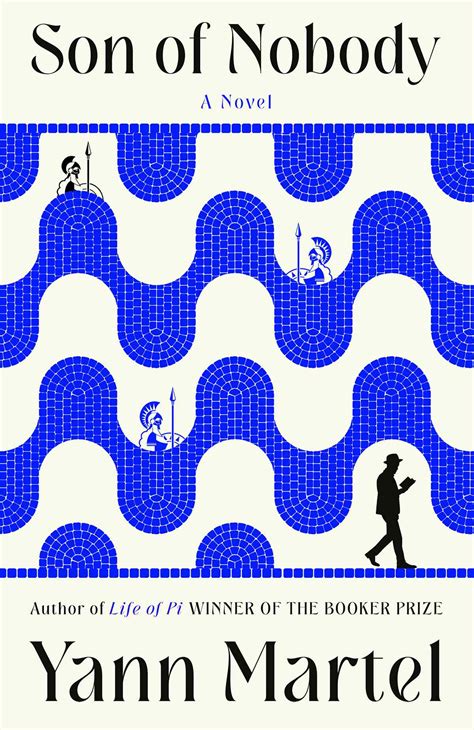
Son of Nobody by Yann Martel. This is an extraordinary novel. At first. I thought that it was going to overwhelm me, primarily because its layout (many half blank pages) suggested an experimental piece. But within 50 pages, it totally captivated me. It works on a number of levels. It is a re-telling (in very direct language) of Homer’s Iliad (the ten-year Trojan War and the sacking of Troy) but from a foot-soldier’s perspective (Psoas, son of nobody) rather than a hero or god’s perspective, such as Achilles, Agamemnon or Zeus. The story is told in 31 ‘books’, each a very accessible poem told in iambic pentameter. Each ‘book’, though, is annotated by a set of footnotes (also very accessible) that not only tell you more about the events and characters – often linked to Homer’s original – but also tell you about the narrator (Harlow Donne, a Canadian classicist) and how the story that he unfolds (found on scraps of clay work in an Oxford library) links (incredibly movingly) to his own life. It is very clever. Furthermore, it seems so relevant to our current world. Misunderstandings of 3000 years ago are still apparent. What the narrator says about the sacking of Troy – “War was back. War was running through the streets. War was entering every house” – could be said about the Middle East and Ukraine today. On yet another level, reading this novel generated an interest in Homer’s work that I had never had before. I now want to read both the Iliad and the Odyssey. A basic knowledge of the Iliad, in particular, would be helpful to get the most out of Son of Nobody, but it is not essential as Martel leads you gently though the journey. I trust that you will find this remarkable work of fiction as rewarding as I did.
This Is Where the Serpent Lives by Daniyal Mueenuddin, I decided to read this book because the Guardian reviewer concluded that it “looks set to be one of the standout novels of 2026” and the New York Times reviewer concluded that “it’s a serious book that you’ll be hearing about later in the year when the shortlists for the big literary prizes are announced.” I totally agree with both reviewers’ conclusions. It is a panorama of life in Pakistan (especially rural Pakistan) from 1955 to 2013, and it is a powerful evocation of the country and its people in that time period. Told as four interlocking novellas, it depicts a wide range of characters (presented as a ‘cast list’ at the beginning of the novel) who tell rich and detailed stories representing their place in society, whether they be members of a well-travelled and entitled aristocracy or workers struggling for survival and opportunities within a feudal system that still seems to be prevalent in the 21st century. Toward the end, a key character (Sadiq) strives for a life that others deem him to be unworthy of, and this culminates in explosive depictions of caste, loyalty, dishonesty and (horrifically) police brutality. For a while, I struggled to pull the links of the stories together but by the end, I felt totally satisfied. It reminded me of the most powerful fiction of Neel Mukherjee and Rohinton Mistry.
The Witch by Marie Ndiaye (translated from French by Jordan Stump). This short novel about a modern-day witch in contemporary France confused me – not because it was difficult to read (it was in fact very easy to read) but because I didn’t see its point. Depicting a domestic nightmare (Lucie’s horrible relationships with her husbands, her daughters, her parents and especially her domineering neighbour Isabella), it had moments of tension and indeed humour. But ultimately it did not challenge me enough to feel satisfying. I expected to like it a lot – it reminded me from time to time of the absurdist plays of Eugene Ionesco and NF Simpson which I adore – but its occasional soaring moments (such as her daughters flying away as crows and her father transforming into a snail) were not enough for me. The New York Times described it as “spellbinding” – not an adjective I would have used.
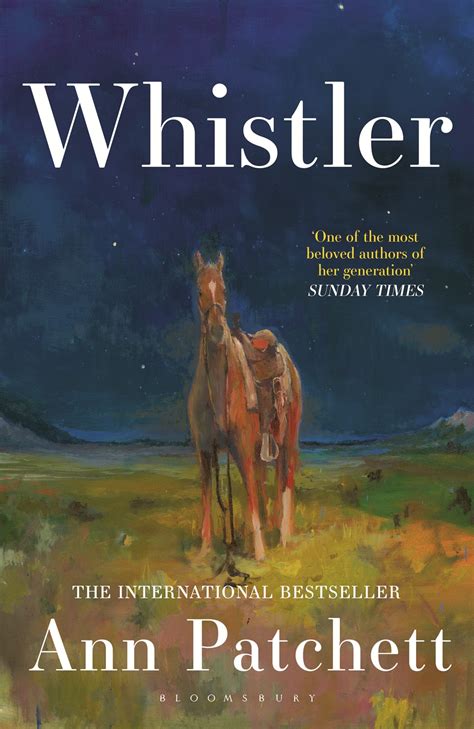
Whistler by Ann Patchett. This is another beautiful Ann Patchett novel. Like many Patchett novels, it is about familial loves, connections and bonds. Set in New York and surrounding counties in near contemporary times, it focuses mainly on the lives of middle-aged sisters Daphne and Leda (and their husbands), their step-father Eddie Trippett who Daphne accidentally runs into at the New York Metropolitan Museum of Art after 43 years, and their thrice-married mother who lived with Eddie for just two years when the sisters were children. It is particularly about the re-bonding of connections between Eddie and Daphne who become the ‘best of friends’, culminating in Daphne becoming Eddie’s main support person as he undertakes treatment for leukaemia. But it also recalls a near fatal car accident that Eddie and Daphne experienced 43 years previously, culminating in Daphne saving Eddie’s life. Hence the beginning of their rekindled bond. We learn about the main characters intimately – from Daphne’s devotion to literature and life with her highly supportive husband Jonathan, to Eddie’s love of life and literature and his 50-year relationship with his best friend Skip – and we laugh and occasionally cry as we move through life with them. Some have criticised Patchett’s novel because of its privileged characters and very positive outlook; despite divorces and impending death, nothing really bad happens to any of the main characters. Is this real life? The Guardian reviewer even described it as “saccharine”. But in today’s world of division, lies, aggression and chaos, what is especially wrong with a prevalence of love and happiness in fiction, especially if it is grounded in ‘real’ characters? What is wrong with Whistler (a metaphorical horse featured in the car accident) giving hope? I loved this novel. I understand why some readers might agree with the Guardian reviewer’s reservations – maybe it does not have the depth of the best of Elizabeth Strout or Ann Tyler (other American writers of domestic fiction) – but its plotline and characters engaged me from the beginning.
The Palm House by Gwendoline Riley. Although highly engaging from time to time and sharp and direct in style all of the time, this acclaimed novel didn’t quite work for me. It should have. Set mainly during 2017 in inner London, its main characters are slightly bohemian/academic types who are connected as writers for a slightly high-brow literary journal called ‘Sequence’. These are characters and a time and setting that I would normally gravitate towards. It is a story of friendship, between Laura (the narrator, in her 30s) and Putnam (her close friend in his late 40s who has recently resigned from ‘Sequence’). Told mainly through dialogue, the friendship is both tender and warm but a little bit sad. So why did it not work for me? The novel appears to have two strands – the central friendship between Laura and Putnam (and a few other colleagues) as well as vignettes from their earlier lives (especially from Laura’s – her unlikeable mother, a sleazy stand-up comic, an over-the-top actor). But, to me, the two strands never really complemented each other as I expected them to. Instead, they just seem to sit side-by-side. Although I enjoyed the novel, by the end I did not feel totally satisfied by it. Yes, it is about middle-aged people just getting on with their lives – as the New York Times reviewer said, there is no “hyperbolic doom or phony happiness” in it – but I think I was hoping for greater depth and stronger resonance.
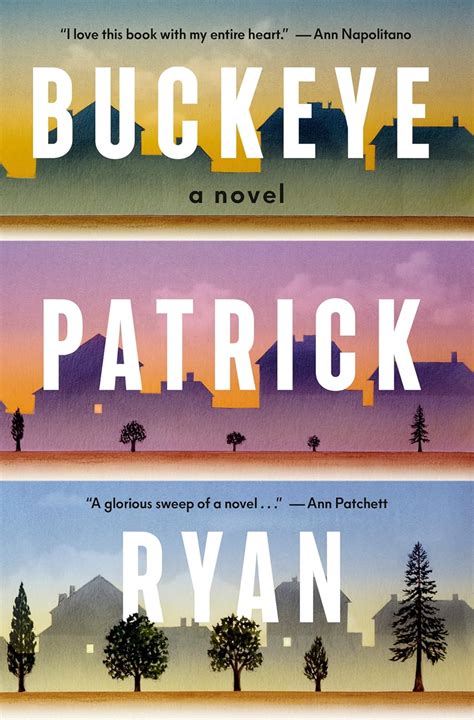
Buckeye by Patrick Ryan. I decided to read this epic family saga because it had been highly recommended not only by one of my favourite novelists (Ann Patchett) but also online by a literary commentator (Eric Karl Anderson) who I greatly admire. Anderson named it as his ‘book of the year’ and indeed of the ‘past few years’. I can see why they were both so excited by it. Set mainly in small town Ohio from the 1920s to the 1980s – covering both World War Two and the Vietnam War – it depicts beautifully and in very accessible depth the inner and outer lives of two married couples and their children. The connection between them emanates from a chance kiss near the beginning of the novel that generates a multitude of secrets and lies. As one of the characters summarises, “People get laid, babies get made, everybody lies to their kids”. It is full of huge themes – loss, abandonment, disillusionment, sexuality, horrors of war – but all explored within the everyday lives of middle America. There is a melancholy to the book, but I never found it overly depressing. It made me cry but it also made me smile. And it is also a vivid depiction of cultural, social and political America of the period with one of the characters continually writing letters of complaint to American presidents of the time. But, above all, it is a moving and luminous family saga that engaged me throughout. I highly recommend it.
Nonesuch by Francis Spufford. This is a dazzling novel that I liked very much indeed. On one level, it is a vivid depiction of London life during the first months of the 1940 Blitz – people worried about where the bombs might fall; the bravery of civilians as they cared for their fellow citizens; the antics of some folk as they thought of every day being possibly their last. And, on another level, it is a time-travelling and metaphysical adventure as the central character (Iris, a determined young woman whose dream is to not only survive the Blitz but become very rich) pursues a fascist fanatic (wanting to assassinate Churchill and place London in the hands of the Nazis) across the rooftops of the city. Metaphysical adventures that feature time-travelling don’t often work for me – I did not enjoy Kiliane Bradley’s acclaimed The Ministry of Time – but the combination of magical realism and real-life adventure worked beautifully for me in this novel. It is as if other-worldly thinking is needed to take people out of the horrors of nightly bombardments. The plot of the novel engaged me; its diverse characters intrigued me; and its denouement almost overwhelmed me. I was interested to read, however, the novelist’s ‘To be continued’ statement at the end. Is there more to tell? I hope so.
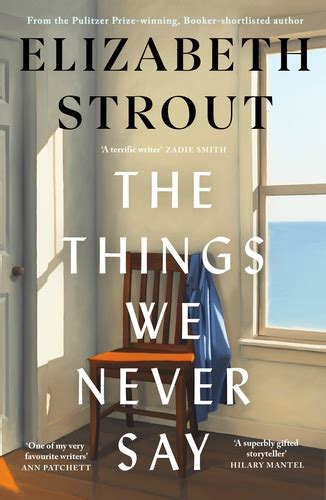
The Things We Never Say by Elizabeth Strout. At just 220 pages, this is a beautiful little novel. Like Ann Tyler and Ann Patchett, Elizabeth Strout has that remarkable gift of ‘going into’ peoples’ inner and domestic lives in a very direct and seemingly simple but ultimately complex way. Over the years, Strout has explored the lives of Olive Kitteridge and Lucy Barton, but this time it is Ardie Dam, a 57-year-old high school teacher living in Massachusetts with his wife Evie. On the surface, Ardie is loveable and jovial; everybody (especially his students) loves Ardie. But below the surface, there is a somewhat lonely and depressed man who continually wonders about the existence of free will. He has some beautiful relationships in his life – especially with his adult son Rob – but he doesn’t know where life is taking him. He also worries greatly about the state of his country as he notes divisions emerging that he has never noted before – it is no accident that the novel is set around the 2024 presidential election and Trump’s first year back in power – and this sense of uncertainty underpins the doubts he has about himself and his place in the world. Strout’s characters are beautifully drawn – you feel you could reach out and touch them – and I felt huge empathy for them as I read this novel: their self-doubts, their relationships with each other, and the things that they never get to say. We all hold secrets within us. I didn’t want this book to end.
All Them Dogs by Djamel White. This novel, set in today’s gangland Dublin, engaged but didn’t enthral me. I was hoping to be as enthralled as I was by Gabriel Krauzer’s Who They Was (set amongst the most violent gangs of North and South London) but I wasn’t. There is plenty of action; there is romance that I had not anticipated; but there is insufficient of either to be totally satisfying. Tony Ward, in his early 20s, has returned to Dublin from enforced exile abroad to re-connect with the friends he left behind and solve a few personal mysteries. Trouble is, almost all the friends he left behind have immersed themselves in gangland, meaning that he will have no option but to do the same. You want to shout at him as he makes ridiculous choices along the way. The most sympathetic characters by far are the four females who dwell on the fringe of his life. Yes, it is about masculinity, violence and vulnerability, but it did not capture me as I had anticipated. It explores the vernacular and atmosphere of its setting well – I could clearly envisage the streets and people of Dublin that it depicts – but not to the degree or depth that I was hoping for. Maybe I’ll get it in White’s next novel?
My next bout of fiction reading will probably be largely guided by the announcement of the long list of the 2026 Booker Prize; usually 13 novels from around the world. I wonder whether any of the novels I have read since the announcement of last year’s Booker Prize will be on the long list?
FESTIVALS
In April, I was amongst the 3000 people who attended sessions at the Auckland Writers’ Festival. I attended six sessions in all. My favourites included:
Tayari Jones (who resembles Oprah Winfrey in appearance) talking about the writing of Kin (discussed above in very positive terms) and how it links to her own family history. I particularly enjoyed this session as she also talked in detail about the writing processes she utilises.
Yann Martel talking so eruditely and engagingly about how he wrote Son of Nobody (also discussed above in very positive terms) and how the conflicts (historical and personal) link to today’s Trumpian world.
David Szalay (author of Flesh which was runner-up to my 2025 book of the year) in conversation with Irish novelist Roddy Doyle. It was such a privilege eavesdropping on two brilliant writers talking to each other about their writing processes and how winning the Booker Prize had affected their lives (Doyle in 1992; Szalay in 2025). Incidentally, Doyle had chaired the panel that awarded the prize to Szalay last year.
I felt like such an awe-struck fan as I stood in line for a 60-second conversation and book-signing with each of them. And, in the case of Tayari Jones, an unexpected and much longer conversation as we both dismounted the Waiheke ferry!!
In May, I managed to attend (between visits to schools) ten films in the 2026 French Film Festival. Movies I particularly enjoyed included:
Colours of Time. A beautifully shot film blending the Belle Epoque (featuring artistes like Sarah Bernhardt, Claude Monet and Victor Hugo) with the lives of contemporary relatives of the said artistes. The film ultimately explores themes of legacy and connection but in a reasonably light and very enjoyable way.
De Gaulle: Tilting Iron. This mammoth movie explores De Gaulle’s life in London as leader of Free France (1940-44). It is a geo-political thriller exploring not only politics but also the impact of war and family struggles. I really enjoyed it (especially the tensions between De Gaulle and Churchill) and appreciated its high production values.
The Money Maker. Based on an incredible true story, this film explores a nail-biting series of events in which a Polish engineer Jan Bojarski must support his family soon after World Wat Two by forging bank notes, something that he is so good at he becomes known as the ‘Cezanne of counterfeit money’. Ultimately, it is about racism and Bojarski’s inability to get legal work because of his ethnic background.
The Stranger. Based on the Albert Camus novel many of us read at school in simple French, set in French-colonised Algeria in 1938, and filmed in black-and-white, this intriguing film tells the story of a detached young ex-patriate on trial for a murder that he never planned to commit. As the young man ponders on issues of morality, I could sense Camus the existentialist behind the story.
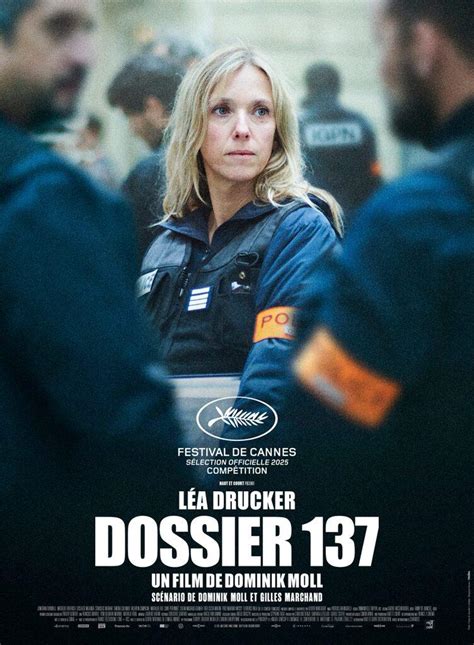
Case 137. This film features an Internal Affairs police officer investigating an extreme case of police brutality during the 2018 anti-Macron demonstrations and riots. It becomes personal when the investigating officer realises that the victim lives in her home town. Ultimately, the film is about loyalty and justice as the officer realises that she will need to confront some of her colleagues which will be an unwelcome move. It moved me a lot.
13 Days, 13 Nights. This film is another thriller, based on true events. Set in Kabul in 2021as the Taliban re-take control of the city, it tells the tale of a group of French diplomats and agents attempting to move 400 expatriates and locals from the French Embassy (the last safe haven in Kabul) to Kabul International Airport and ultimately out of the country. It had me on the edge of my seat, just as Argo did in 2012. It was filmed as a very engaging docu-drama.
I would recommend any of these movies if they returned for a general release. I now look forward to the International Film Festival when it plays in Auckland in July-August.
What do you think? Share your thoughts...