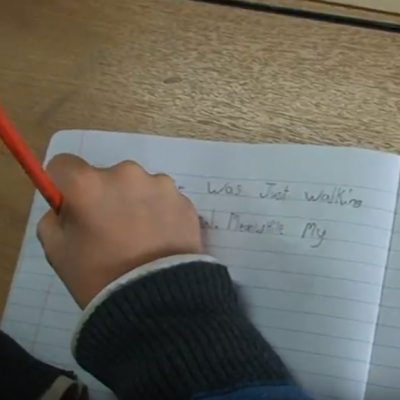
Writing Skills For Year 1-9 Students
This is a list of the writing skills and strategies that I believe most students at each year level should be able to demonstrate, given good teaching.
It is closely aligned to the revised New Zealand Curriculum (2025).
Free document, revised and updated July 2025.
This is a comprehensive PDF document of 34 pages.
It has been developed around the following headings:
- Content / Ideas / Purpose
- Text And Sentence Formation / Grammar
- Vocabulary / Language Features
- Spelling / Handwriting
- Punctuation
- Writing Processes
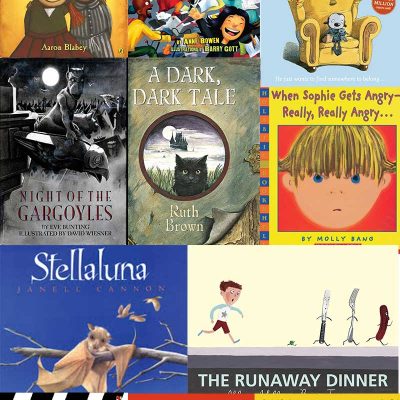
Picture Books For Reading And Writing (List #1)
This is a list of picture books (including sophisticated picture books) that I use to motivate and engage Year 1-10 students in reading and writing.
A second list is also available here
For reading, I use them as ‘read to’ books and sometimes as models of what good writers can do.
For writing, I use them to establish writing ideas and content for and with students.
You may wish to review the Murray Talks videos for teacher guidance and the Video Lessons for some ‘follow along’ content.
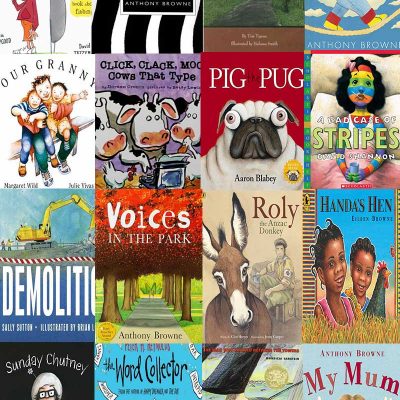
Picture Books For Reading And Writing (List #2)
This is the second list of picture books (including sophisticated picture books) that I use to motivate and engage Year 1-10 students in reading and writing.
The first list is available here, also as a free download.
For reading, I use them as ‘read to’ books and sometimes as models of what good writers can do.
For writing, I use them to establish writing ideas and content for and with students.
You may wish to review the Murray Talks videos for teacher guidance and the Video Lessons for some ‘follow along’ content.
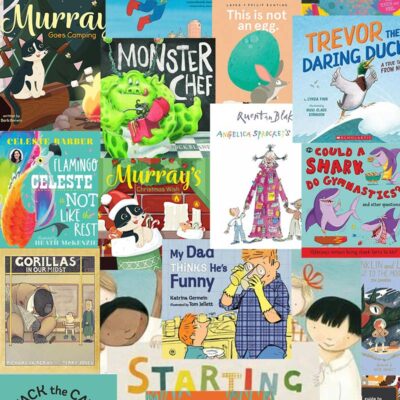
Picture Books For Reading And Writing (List #3)
It is three years since I put together (with the help of several school librarians) my update of suggested picture books for reading and writing. Now it’s time for another update. All of the lists are available here as free downloads. Just sign in and download at no cost.
The following list of books (some new; some old) are the main ones that I have come across and/or having been using in my reading and writing programmes over the past three years. Some are recommended for particular age groups, and some (as you will see at the end) have been used as the subject of Video Lessons I have included in my on-line subscription resource.
Have fun reading these books and sharing them with your students, and good luck with coming up writing ideas that might go with them. Remember, in most cases it will not be a matter of just re-telling the stories in writing time; it will be more a matter of taking the main themes or ideas in the book and getting students to apply them to their own lives and experiences. Look at how I do this in any of my lessons.

Spelling: Some Ideas
This document has been designed to give schools some guidance on:
- The place of spelling within the writing programme.
- What students of all year levels ought to be able to demonstrate as proficient spellers.
- The stages of students’ spelling development.
- Some spelling ideas and activities for teachers of junior students and middle-senior students.
A predominant message is that spelling needs to be deliberately and strategically taught within the writing programme as a basic courtesy for the reader.
Reading Skills For Year 1-9 Students
This is a list of the reading skills and strategies that I believe most students at each year level should be able to demonstrate, given good teaching.
It is closely aligned to The New Zealand Curriculum, the Literacy Learning Progressions, the English Language Learning Progressions and e-asTTle Reading.
Beginning The School Literacy Year: Some Notes For Teachers
It is surely every teacher’s desire and goal to seek to enable and create success for their students in the classroom.
The beginning of the new school year can be daunting for students, as well as teachers, with so many new faces, curriculum changes, excitement and a plethora of other distractions.
With regard to literacy goals, it is important to establish a clear understanding from the outset with your students.
You should aim, within the first fortnight of the new school year, to communicate clearly with your students that:
- ‘Our job during the year is to become the best readers and writers we can be’.
- ‘Reading and writing can be fun as well as challenging’.
- ‘I need to work with you to find out what you’re already good at and what you need to work on so that I can help you’.
In this respect, this document’s aim is to assist teachers by providing typical questions they can ask themselves when preparing for the school literacy year.
What Is Quality Writing?
Teachers need to understand what constitutes quality writing if they are to move their students towards it. In this document I:
- Justify why knowledge of quality writing by students is so important.
- Suggest ways of getting students to identify quality writing.
- Offer my own thinking about what I’m looking for in the best of student writing.