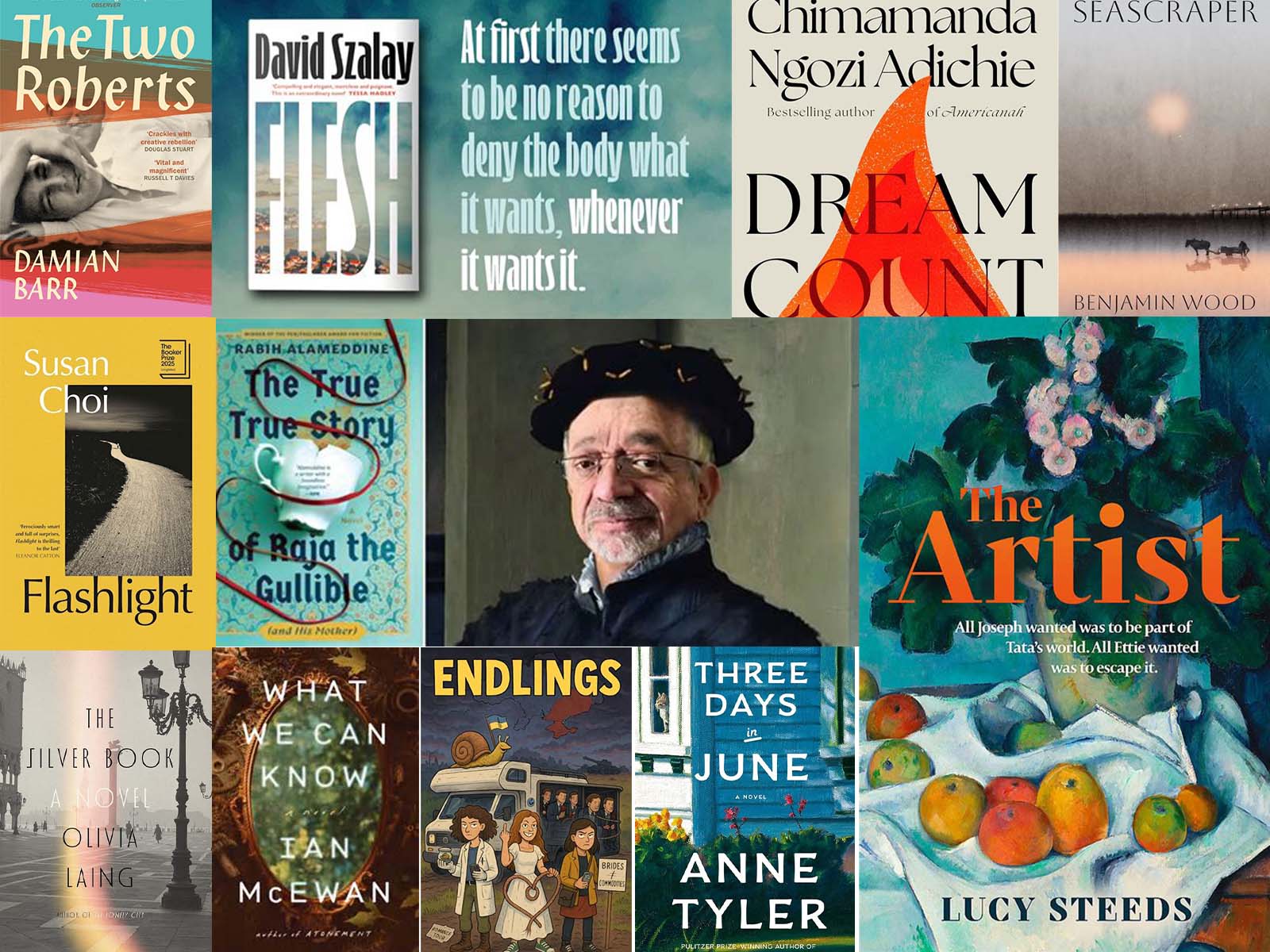
This time period, covering the Xmas/summer holidays, was a great reading period for me. I read (and largely enjoyed) sixteen new novels and one work of non-fiction. After my discussion of them, I’ll conclude with my ‘best of 2025’ list.
I also found time to watch (and enjoy) many streamed series that I will comment on at the end of these notes.
BOOKS
As usual, I’ll discuss the books in alphabetical order, by author:
Dream Count by Chimamanda Ngozi Adichie. This, Adichie’s first novel in ten years, is a ‘friendship saga’ set between America and West Africa (especially Nigeria and Guinea) as the pandemic sweeps the world. Three of the central characters are middle-class, middle-aged, independent and very wealthy women whose ‘dream counts’ (what will ultimately happen in their lives?) we learn about through their separate but connected reflections on their inner and outer lives. I assumed that Adichie was trying to take us into the psyche of a particular set of modern African women. But, on the whole, I was not always engaged. I wanted more than the continual twittering of a group of highly privileged friends. But – this totally changed when the novel focussed on the fourth character. This was Kadiatou whose life is anything but privileged. She is the housekeeper of one of the three friends and endures what can only be described as a hideous assault, based on what actually happened to a West African ‘maid’ cleaning a suite at a prestigious New York hotel just before the pandemic. What happens to Kadiatou (portrayed in vivid and heart-breaking detail) kept me going through the novel. So, ultimately, a novel of two halves. Beautifully written, but I longed to get back to Kadiatou’s story as I endured the others’ stories. On the basis of her story being the main focus of the novel, I would recommend it but with reservations.
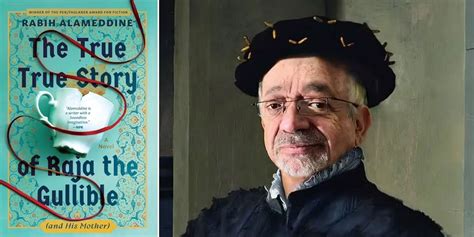
The True True Story of Raja the Gullible (and His Mother) by Rabih Alameddine. This novel, which won the American National Book Award for Fiction in 2025, is a comic saga spanning six decades (1960-2023) in the life of a Lebanese family, often at metaphorical war with each other. Mainly set in Beirut, it covers the period of the Lebanese civil war (in the 70s), invasion by Israel in the 80s, the economic collapse of Lebanon in the late 2010s, the Covid pandemic and the devastating explosions at the port of Beirut in 2021. It is a splendid read and had me totally engrossed until the final page. It is not only comic but also very quirky, dramatic, poignant and indeed moving from time to time. It is rare for me to cry while reading a novel, but I cried several times during my reading of this book, especially toward the end. Narrated by Raja – a middle-aged, gay, philosophy teacher working (in the tradition of Miss Jean Brodie) at an esteemed Beirut high school – the novel begins and ends in 2023. But in between are a series of tales and adventures involving not just Raja but often his entire family: a heart-wrenching but bizarre kidnapping during the civil war; a mad-cap visit to the US by Raja; an enforced and hilarious family reconciliation generated by the port explosion. Although each of these stories – and others – are complete in themselves, they merge beautifully together to depict the life of a most remarkable man – his loves and hates – and the strong and tender bond between him and his frustrating mother Zalfa. It is also filled with a cast of quirky and beautifully drawn supporting characters, especially Zalfa’s best friend (Madame Taweel) who is an elderly female Mafioso boss. I can give this novel no greater recommendation than comparing it favourably to the fabulously funny and moving novels of Alaa Al Aswany, especially The Yacoubian Building and The Automobile Club of Egypt. Alameddine, just as Aswany did in his novels, builds an extraordinary and often very funny political, social and economic microcosm of the Middle East through the lives of a group of remarkable characters. Read The True True Story of Raja…. and enjoy it.
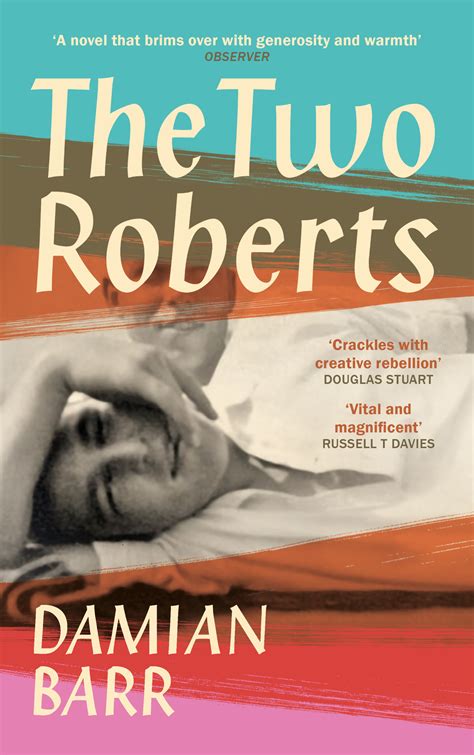
The Two Roberts by Damian Barr. This fictionalisation of two real-life Scottish working-class artists – Robert MacBryde and Robert Colquhoun – is incredibly moving and engaging. It is a vivid and direct depiction not only of their lives but also of their relationship, usually loving but sometimes destructive. We learn about their poverty-stricken childhood; their meeting and flourishing at the Glasgow School of Art in the 1930s; their grand art tours of Paris and Rome; their war-time experiences that almost tore them apart; their huge successes across London in the 1950s; their collapse into poverty and alcoholism preceding their untimely deaths in the 1960s. At their height, they were referred to as MacPicasso and MacBraque. To huge acclaim, one painted human figures, the other still-lifes. But it is also a novel celebrating queer UK culture in the 1930s, 40s and 50s; London Bohemian life in the 1950s (their Soho friends included Francis Bacon, Lucien Freud and Dylan Thomas); and the joys of being Scottish. It is one of those novels that inspires you to undertake further research – for example, toward the end a small documentary is made about their art by a ‘Mr Russell’ who they are told to call ‘Ken’ – I was to discover that Ken Russell’s 11-minute documentary (his first piece of film-making) is readily available on line. This novel engaged me greatly and took me vividly into an artistic world that both intrigued and fascinated me. I recommend it highly.
Deviants by Santanu Bhattacharya. This novel – firmly contextualised in India from the 1970s to the 2020s and featuring the lives of three inter-related (uncles and nephews) gay men – worked on three levels for me. Foremostly, it is a moving and sometimes very emotional depiction of the three sets of lives as they cope with the tensions between societal, family and their own expectations, and move through a set of (almost always illicit and sometimes disastrous) love affairs. It is also a fascinating portrait of gay life in India over the three-year period – from the darkness of the 1970s when everything is told in whispers and men are regularly imprisoned for gay sex, to the slightly more enlightened 1990s but where whispering is still required, to the more enlightened 21st century where political barriers have been knocked down and young men can revel in app-driven hook-ups. But is all as progressive as it seems to be in the 21st century? Societal and especially family pressures can take a long time to disappear. It is also an equally fascinating look into Indian society per sae, as it moves well beyond the uncle-nephew relationships that form the heart of this very good novel to the lives of other family members.
The Loneliness of Sonia and Sunny by Kiran Desai. At close to 700 pages, this is a spawling work of fiction based primarily on the lives of the two titular characters and their families and friends, and set across four locations (India, particularly Delhi and Goa; the United States, particularly New York and Vermont; Mexico; Venice) between just 1996-2001. Overall, it is a bustling mass of (largely) fascinating characters and actions that range from bizarre to ordinary. It is also a deep exploration of diverse social and cultural mores as characters from particular backgrounds try to cope with cultural contexts that are largely alien to them. Hence the loneliness of the title. And it is also a love story – will the barriers separating Sunny and Sonia finally be overcome? I wanted to love this book, just as I have loved a range of other Indian fiction, especially the early novels of Salman Rushdie, Rohiton Mistry and Neel Mukherjee. But I never got as emotionally engaged in it as I had hoped. Why? Despite her beautiful writing, a strong and direct plot-line didn’t seem to be as important to Desai as disparate episodic descriptions; its magical-realism aspects (important for character development) meandered for me; and it became somewhat bloated in detail from time to time. I admired this book greatly but didn’t love it. Others have loved it more that me, with The New York Times reviewer describing it as “not so much a novel as a marvel….truly transcendent….providing better company than real-life people”. This was not my experience.
Helm by Sarah Hall. Helm is the only named wind in the UK, just as the Mistral is the only named wind in France. Helm blows in Cumbria, particularly the Eden Valley, and consequently this novel is set in just a tiny part of the UK – around the Pennines. But the titular wind (Helm) is also a character in the novel, making it a story about the weather, just as Richard Powers’ The Overstory and Daniel Mason’s North Wood were. But there are many human characters in the novel as well – ranging from (for example) an old woman in the Bronze Age, to a soldier in medieval times, to a Victorian scientist, to a contemporary meteorologist who is investigating issues around climate change – and their ongoing stories (all to do with the wind) are interspersed throughout the novel. Some of these stories engaged me more than others did – I particularly engaged with the three contemporary stories – but all of them had degrees of fascination. The book is clever and beautifully written, with each story being told in the style and tone of its time. But two issues got in the way for me: the scientific content became too dense for me at times; and the occasional randomness of the eight interspersed stories confused me re. characters and time period from time to time. I appreciated this novel more than I loved it, though I can see why others do.
Open, Heaven by Sean Hewitt. This novel about first love is beautiful. Narrated by James, a man in his early 30s, he recalls his adoration of Luke in their teenage years and his anxiety about where that adoration will go. It is full of desire, yearning and terror – terror about whether one’s deepest feelings will be understood and reciprocated, especially in a context of (reasonably mild) homophobia. Does Luke even know what is going on? Does he understand James’ feelings? How is he going to react? I did not actually expect to enjoy this novel very much but a friend had recommended it. Its author (Sean Hewitt) is primarily a poet and I expected the narrative to be so densely poetic that I would have to work hard to build clear pictures in my mind. This was not the case. Set largely within the English countryside, yes it is poetic. But it is written in such a way that the meaning, the atmosphere and the settings became very clear for me. Maybe not for everyone, but I could relate to the sentiments and feelings of this novel and I ultimately found it very moving.
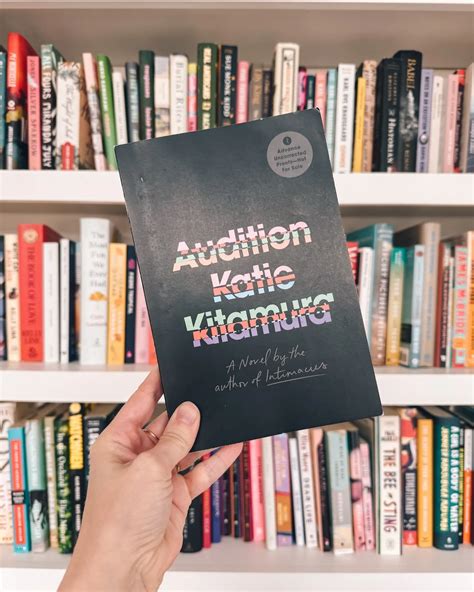
Audition by Katie Kitamura. This short novel (197 pages) is indeed a puzzle. As I was reading it, I spent time and energy trying to solve the puzzle. What is the novel saying? But I then read an interview with the author who stated that the puzzle has no particular solution. It is up to each reader to form their own solution. Normally, this would really irritate me as I like answers to be given. But I found the characters so fascinating and the settings so interesting and the plot possibilities so wondrous, that I read the novel in one sitting to its all-powerful denouement that reminded me of the extremities of Edward Albee’s play Who’s Afraid of Virginia Woolf? To me, the novel is about the nature of reality. Having a successful Broadway actress (rehearsing and performing a hit play) as its (un-named) narrator, you ask yourself: Are her family members for real or is everyone acting out roles? Is the play she is performing really fiction or is she acting out her own life? How many of the intriguing scenes in the novel are real or how many are imagined? I suspect the ‘answers’ may be in a statement that the narrator makes near the beginning – that a story has two narratives; one inside the plot-line and one outside. Not for everyone; but I really liked this novel.
The Silver Book by Olivia Laing. This novel fascinated me. Described primarily as a “queer noir-ish thriller”, it is ostensibly set around the murder (or assassination?) of Italian film-maker Pier Paolo Pasolini in 1976, just before the premiere of his sado-masochistic depiction of fascism, Salo: 120 Days of Sodom. But it is also a love story. Nicholas, a 22-year old art student from London, meets Danilo Donetti, costume and set designer for both Salo and Federico Fellini’s Casanova, and moves to Rome with him where they work collaboratively on both the Fellini and Pasolini movies. Being a lover of 1970s Italian cinema, the back stories behind the making of these two iconic movies fascinated me. Laing brings the whole movie-making process at the famous Cinecetta studios alive. But the novel contains far more depth than just movie gossip and salacious suggestions of underworld living. The artifice and illusions that Nicholas and Danilo have to create for the movies is brilliantly contrasted with the hedonistic and brutal realities of the rather sordid world that the mixture of real-life and fictional characters inhabit. As such, the novel feels very contemporary. Although set in the 1970s about the making of movies set in earlier times, the links with the rise of fascism in today’s world become very clear. Through her use of present tense, taut sentences and almost staccato paragraphs, Laing builds up tension beautifully throughout the novel. I recommend it highly, especially to lovers of the cinema.
The Rest of Our Lives by Ben Markovits. This short novel, written as a piece of ‘unflashy naturalism’, reminded me of the fiction of Anne Tyler and Anne Pratchett, but with a middle-aged man (instead of a middle-aged woman) quietly unhappy with his life at the centre. Fifty-five year old Tom Layward, a law professor who is on enforced leave from his work, believes he is in a C- marriage giving him no chance of exceeding a B- life. Ten years previously, having learnt that his wife Amy had had an affair, he determined to leave his marriage when his youngest child left home. Having just delivered her to College, now is his chance to leave, and he consequently sets off on a road trip from New York to Los Angeles. He tells his story directly to us as he travels and we soon learn not only about his self-doubts (is he doing the right thing?) but also about medical issues that he is facing. It is not a depressing novel, but one that takes us directly and quietly into the life and thoughts of a middle-aged doubter. Is there something more to life than what Tom is experiencing? This was an easy book to read and reasonably satisfying.
What We Can Know by Ian McEwan. This new novel by the prolific Ian McEwan is hugely entertaining; almost a page-turner. I would agree with The New York Times reviewer who wrote: “It’s a sophisticated entertainment of a high order”. It works on several levels. Primarily, it’s a literary thriller (almost a who-dunnit) in the tradition of A.S. Byatt’s Possession and Tom Stoppard’s wonderful play Arcadia. Scholars from one century are putting clues together to locate a missing poem that has come to be recognised as the masterpiece of a renowned poet (Francis Blundy) from the previous century, even though no-one has actually read it. As such, it is both scholarly and fun, filled with murders, kidnappings, fraud and adulterous affairs aplenty. But, on another level, it is a dystopian novel about life in our times. The search actually takes place in the 22nd century when Europe and America have been reduced to a series of archipelagos as the result of an enormous tsunami caused by a faulty Russian nuclear warhead detonating by accident in the middle of the Atlantic. In addition, Nigeria has become the financial centre of the world. All the geo-political and climate-change denying faults of our current times have led to the “inundation of 2042” and searching in such a context becomes very difficult. Mc Ewan brings these two aspects – the literary thriller and the exploration of dystopia – together very cleverly and I was both engaged and intrigued throughout my reading of the novel. I highly recommend it.
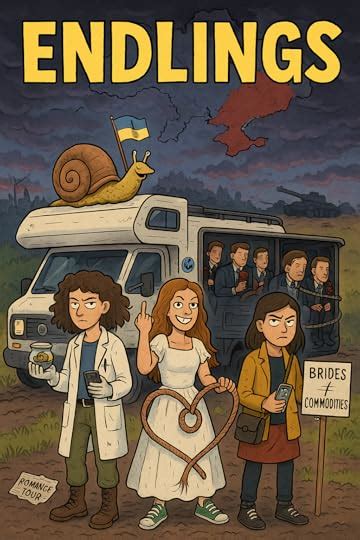
Endling by Maria Reva. This is a marvellous novel that absolutely intrigued me. Yes, it is experimental in many ways – signified mainly by the auto fictional intrusion of the author from time to time – but it is not difficult to read. Furthermore, the authorial intrusion makes total sense as you continue to read the novel. Set in Ukraine in 2022, it starts out almost as a romp. A small group of women (including a maverick scientist devoted to saving near-extinct snails) undertake ‘work’ with a Ukrainian marriage agency, not only to make money but also to score political points. This culminates in the women kidnapping a dozen Western men (who have come to find brides) and driving them across Ukraine in the scientist’s mobile laboratory. But on February 23, this plot-line is severely interrupted – the Russian invasion of Ukraine has begun. The novel seems to end abruptly (even notes on the author’s background and the typeface are given as they often are at the end of a novel) as the author intrudes and wonders whether she can justifiably continue such a romp given the full-scale invasion that is happening. This is particularly poignant when we learn that the author herself is Ukrainian but living far away in Canada. But continue she does, and the plot becomes quirkier, more farcical and darker as time moves on. The fictional characters appear to blend into real people and one wonders whether this is Maria Reva (the author) reflecting through fiction about what is happening to her country of birth. Is it going to suffer the fate of the endlings – the last known samples of an animal species – that give the novel its title? It continues as a romp almost until the end, but with a sense of darkness, sadness and foreboding that wasn’t apparent in the beginning. This, to me, is a very clever novel, but a novel with something important to say and I recommend it highly. It both engaged and challenged me.
The Artist by Lucy Steeds. This is a beautiful novel that had me engaged until the end. Set in Provence in 1920 – largely in the dark aftermath of WWI – it focusses on three characters living together in a decrepit old farmhouse: Edouard Tartuffe, a renowned artist but tyrannical person; Ettie, his niece, who lives her life almost as a prisoner and has had to subjugate her artistic ambitions to her uncle’s every wish; Joseph Addison, an English art writer who is allowed to observe and write about Tartuffe at work. One realises on the first two pages that life for these three characters is not going to be straightforward – we learn at the beginning that almost forty years after the main events Tartuffe’s work has been largely subsumed by a deliberately-lit fire – and the novel slowly moves us to that fire. It is a love story with an almost ‘who-dunnit’ element; it is an exploration of art as an overwhelming passion; it is a novel of place and time as Steed’s elegant and evocative languages makes the colour, light and sensory delights of Provence come alive; and it is a novel about the creative process itself as diverse works of art (mainly paintings) are created.
The Book of Records by Madeleine Thien. This is a complex novel of ideas that I read because I loved Thien’s last novel (Do Not Say We Have Nothing) and because a literary commentator who I admire greatly nominated it as his ‘book of the year’. It is not my book of the year – I require more emotional engagement than this novel eventually gave me – but I admired it very much. It has a plot – a Chinese woman (Lina) and her grandfather are searching for lost relatives – but the plot is merely a device to introduce, discuss and explore metaphysical ideas – ideas about time, memory, place, spiritual beliefs, migration, exile, identity, ethics and story-telling. Lina and her grandfather meet up with three acquaintances who turn out to be avatars for three famous thinkers: the 8th century Chinese poet Du Fu; the 18th century Portuguese-Jewish philosopher Baruch Spinoza; the 20th century German-Jewish philosopher Hannah Arendt. Du Fu, Spinoza and Arendt are all marvellous story-tellers (especially Arendt) and the stories they tell compel us to reflect on the key question of the novel: What makes a good life? Ideas on this are collected into the titular ‘book of records’. No, it is not an easy book to read – I had to work hard from time to time – but I suggest that you might find it very rewarding if you were prepared to accept and sustain the intellectual challenge that it demands of the reader.
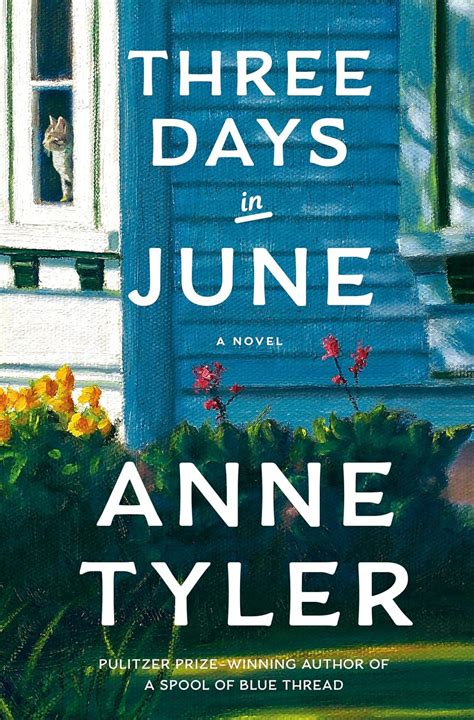
Three Days in June by Anne Tyler. This is a beautiful little book. Little, in that it covers just the three days of its title over just 165 pages. As only Anne Tyler (or maybe Ann Patchett or Elizabeth Strout) can do, the author takes us gently but directly into the life of the narrator (Gail Baines) on the day before her daughter’s wedding when she, along with her ex-husband Max and her mother Joyce, attend the wedding rehearsal, and the bride-to-be (Debbie) shares her pre-wedding doubts with her parents; on the day of the wedding itself; and on the day after as Gail and Max recall what life together used to be like for them. Gail as a character is a little icy but there’s a warmth trying to get out. Nothing much seems to happen in the novel, but indeed everything happens. With pathos and humour, Tyler takes us yet again (this is her 25th Baltimore-set novel) into the domestic details of a set of middle-class, suburban characters. We experience their upsets and concerns but also celebrate their occasional triumphs. Her characters live on the page, and we feel that we are in that house, that church and that restaurant with them. It is an old-fashioned book in some ways – there’s hardly an expletive in sight – but it resonated hugely with me. As with all of Tyler’s novels, highly engaging.
The Illegals by Shaun Walker. This highly researched work of non-fiction is riveting! An ‘illegal’ (a term I did not know) was spy who could infiltrate a western country (often the US) and live as a native of that country for many years whilst undertaking whatever espionage the KGB (or its equivalent) directed them to undertake. Being an ‘illegal’ looked different in different time periods – from Lenin’s post-revolution USSR, to Stalin’s purges to WWII and the Nazi invasion, to the Cold War, to the fall of communism and the disintegration of the USSR. To Yeltsin’s Russia, to Putin’s Russia and the invasion of Ukraine. Are there still ‘illegals’ living and working in the west? The book finishes with that question and a subsequent answer: “Yes….but how many we don’t know”. As a John Le Carre aficionado, what makes this book work so well for me is that it performs on so many different levels. It gives an overview of the programme and its many successes and failures; it encapsulates this within a history of the Soviet Union and Russia over the past 100 years; it focusses on occasions that we all know about (such as the assassination of Trotsky, Hitler’s invasion of the USSR, the Cuban Missile Crisis, the Prague Spring, the fall of the Berlin Wall, 9/11, the invasion of Ukraine) and the role of ‘illegals’ on those (and other) occasions; it takes us into the minds of key Soviet and Russian leaders (from Lenin to Stalin to Khruschev to Brezhnev right through to Putin); it fascinates with the details of the training and communication of participants; and, most compellingly, it takes us into the personal and inner lives of ‘illegals’ and their families in the field. It frightened me toward the end when I learnt that Putin is a big fan of the movement (from his KGB days) and shows no end of finishing it, even in these days of AI. One could envisage ‘illegals’ being vital to any conflict between Russia and NATO.
Seascraper by Benjamin Wood. This is a truly beautiful book. On the surface, it covers just two days in the life of a young lad (Thomas) who scrapes his local beach for shrimps for a living. This is hard, dangerous and lonely work as he toils endlessly with only his horse for company. He lives with his mother who bore him at age 15 and is now dependent on his income. But, despite this context, he is not an angry young man; instead, he is a soulful lad who secretly aspires to more in his life whether it be singing in a folk group or wooing his friend’s older sister Joan. On the first of the narrative’s two days, the arrival of a Hollywood director scouting for locations for his next film signals a possible change to Tom’s fortunes. But does it? The plot is simple, but very dramatic at times. I got a couple of huge surprises as it moved in directions I had not expected. But Wood (the author) is wonderful at not only expounding plot but evoking brilliant characterisations and marvellous settings. You can not only see but also smell, hear and feel the wild beach that Tom spends so much of his time at. Although it covers just two days of his life, we feel that we know not only the details of the first 20 years of Tom’s life from the narrative but even what his future might be from the under-stated and carefully-placed hints that Wood suggests. I highly recommend this very short (162 pages) novel and can understand why a lot of people felt that it should have won the 2025 Booker Prize.
MY NOVELS OF 2025
I have read 26 novels over the past twelve months and one stood out for me as my ‘best of 2025’: The True True Story of Raja the Gullible (by Rabih Alameddine) which I read right at the end of the period. I only read this book because it won the American National Book Award for Fiction for 2025 and I’m so pleased that I did. I cannot recall when I have laughed, gasped and cried so much as I devoured a work of fiction.
A close second for me was David Szalay’s Flesh, a deeply moving and highly entertaining exploration of a young working-class man’s life in the contemporary world. I did not expect this to win the 2025 Booker Prize but was thrilled when it did.
My other highly recommended novels from 2025 are:
– The Two Roberts by Damian Barr.
– Flashlight by Susan Choi.
– Our London Lives by Christine Dwyer Hickey.
– The Silver Book by Olivia Laing.
– What We Can Know by Ian McEwan.
– Endling by Maria Reva.
– The Artist by Lucy Steed.
– Seascraper by Benjamin Wood.
STREAMED SHOWS
Just a few notes to finish on some of the streamed shows that I’ve been watching recently:
All Her Fault (TVNZ+). This eight-part drama series (starring Sarah Snook) had me intrigued. A child goes missing in the first episode and almost everyone becomes a suspect. But what is most interesting are the powerplay relationships between the main characters – who is manipulating who? – as the series moves to a denouement.
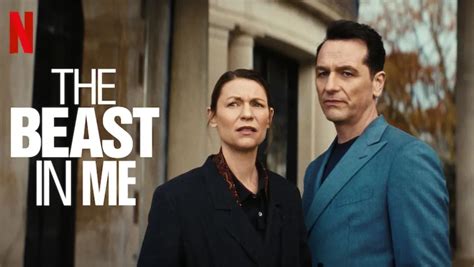
The Beast In Me (Netflix). Starring the wonderful Clare Danes and Matthew Rhys, this suspenseful four-parter depicts a grieving writer (Danes) playing cat and mouse with her real estate mogul neighbour (Rhys) as she attempts to unravel the mystery of his vanished wife. The more she unravels, the more psychotic he becomes…. This series had me on the edge of my seat.
Bookish (Neon). This is a gem. Mr Book (played by Mark Gattiss) – an antiquarian bookseller in 1946 London – works with his wife and a local police inspector to solve three murder mysteries over six episodes. But Book and his wife’s relationship has you guessing from the start as well. What’s really going on between them? The series is fun and very clever.
The Diplomat (Netflix). This is Season 3 of this very exciting series. Keri Russell continues to play the American ambassador to the Court of St James in London as diplomatic scandals involving the newly-appointed American president (the wonderful Alison Janney) emerge. Who indeed is telling – or not telling – the truth?
Down Cemetery Road (Apple). I would watch anything starring Emma Thompson and this eight-part series (set across England and Scotland) did not disappoint me. A concerned neighbour and the wife of a murdered private investigator search together for a missing child but also unravel a rather gruesome political conspiracy. Some of the characters and situations are rather ‘extreme’ which makes the series amusing (from time to time) as well as very dramatic. I really enjoyed it.
The Hack (TVNZ+). I would also watch anything starring David Tennant (ever since I discovered him in Broadchurch) and this seven-parter (set across London) fascinated me. Set between 2002-2012, it deftly interweaves two real life stories – an investigative journalist (Tennant) uncovering evidence of phone hacking by tabloid newspaper journalists and a police officer (Robert Carlyle) investigating the unsolved murder of a private investigator. The writer links these two stories very cleverly, and the slow but steady unravelling of the truth intrigued me.
House of Guiness (Netflix). This Dublin-based family drama is like an Irish version of Succession. Sir Benjamin Guiness (of Guiness brewery fame) dies and leaves a will that has his four children vying and fighting each other (and others) for power. The emergence of family secrets over the eight episodes only complicates matters. Great and richly drawn characters in an engrossing story.
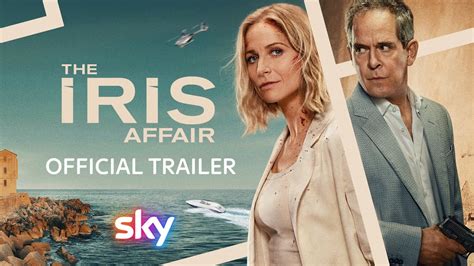
The Iris Affair (TVNZ+). Watching this six-part science-fiction thriller was like reading an airport novel. You know that it is not ‘high art’ but you have to turn the page to find out ‘what happens next’. It involves a code-breaking genius being pursued across Europe by diverse groups of ‘baddies’ (including the wonderful Tom Hollander) to gain access to a robot designed to alter the world. Lots of fun.
Maigret (Three Now). I loved the mystery-solving of the Parisian Inspector Maigret on television when I was a child so was delighted to learn that a new series (set in today’s Paris but delivered with English accents) had been made. Maigret solves three murders over six episodes through strategic use of his deep understanding of the human psyche as well as his meticulous knowledge of police procedures. Benjamin Wainwright (rumoured to be the next James Bond) is certainly a more handsome version of the police officer than was Rupert Davies who played the original. Who says that Maigret can’t be sexy as well as clever?
Mid Century Modern (Disney). This American comedy series is rather old-fashioned but very very funny. Starring the wonderful Nathan Lane, it is a male version of the Golden Girls featuring the antics of three middle-aged gay and rather camp men who share a Palm Springs house with one of their mothers. I laughed a lot but also groaned from time to time.
Monster: The Ed Gein Story (Netflix). Having always been fascinated by Hitchcock’s thriller Psycho, I was intrigued to watch this four-part series exploring the horrific life and background of Ed Gein, the real-life version of Norman Bates from Psycho. There were times when I felt that I couldn’t watch it anymore – how could anyone behave so gruesomely? – but watch it I did. It also features a wonderful cameo from Lesley Manville as one of Gein’s girlfriends. Not for everyone.
The Morning Show (Apple). I have finally got round to watching this series (starring Jennifer Aniston, Reece Witherspoon and Billy Crudup) and couldn’t stop till I’d binge-watched all 40 episodes. The politics of a cut-throat New York television station (as they plan and present a morning news show) is indeed riveting viewing.
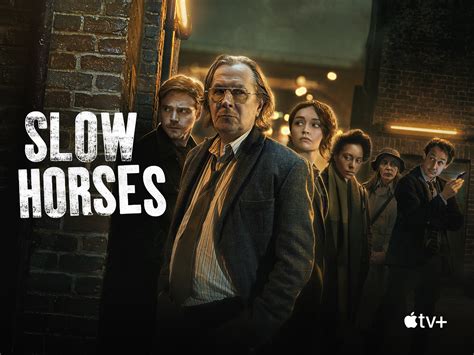
Slow Horses (Apple). I love Slow Horses and was delighted when Season 5 was announced. Featuring, as always, the usual bunch of dysfunctional but very clever MI5 agents, headed by the wonderful Gary Oldman playing the revolting Jackson Lamb. This time, they take on a group of far-right extremists who attempt to manipulate the agents directly in order to overthrow the government. I can’t wait for season 6. .
What do you think? Share your thoughts...