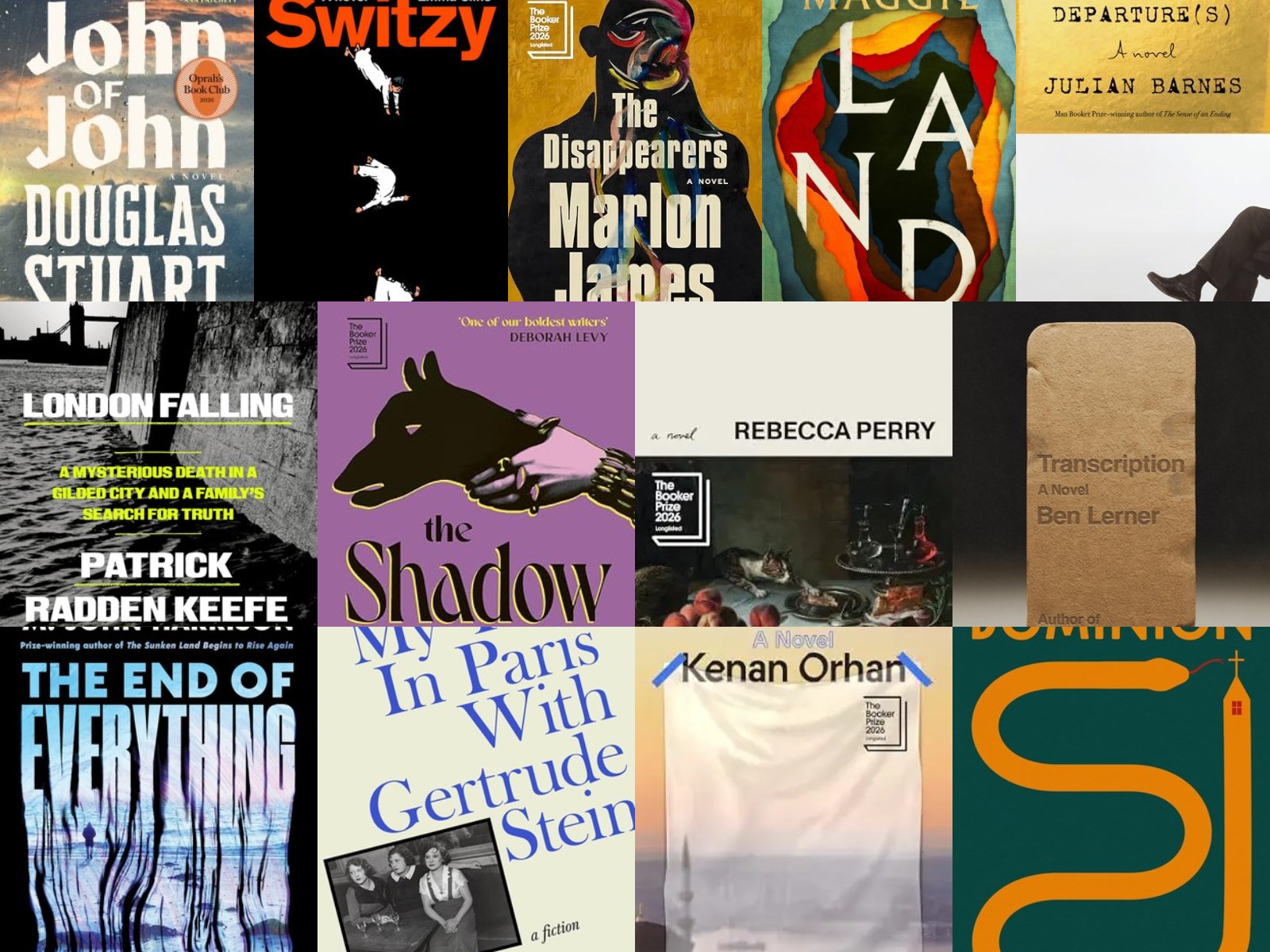
UPDATE ON THE ARTS JULY – OCTOBER 2026
This has been a great reading period for me. I read (and largely enjoyed) 16 new novels and one work of non-fiction in the period, including several books that I suspect will be on my ‘best of 2026’ list. My reading over this period has been largely dominated by the announcement of the 2026 Booker Prize longlist (of 13 novels) in July and the shortlist (of 6) in September. Of the 13 long-listed novels, I have now read 10, including almost all of the shortlisted.
BOOKS
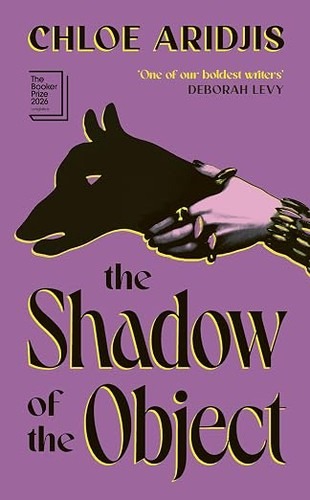 The Shadow of the Object by Chloe Aridjis. Plot-wise, this novel (longlisted for the 2026 Booker Prize) is not strong. London-based Flora gets bitten by her parents’ Alsatian dog while visiting them in Mexico City; while in hospital, she befriends an elderly German woman (Wilhelmina) who collects pre-cinema toys and instruments; back in London, she begins a relationship with Wilhelmina’s son Max as they jointly assume responsibility for Wilhelmina’s collection. But all actions and interactions have a dream-like quality to them as depicted by Aridjis, making the novel an exploration of reality and perception rather than just a portrait of part of Flora’s life. The illuminations of Wilhelmina’s magic lantern show – first shown by Wilhelmina herself in the Mexican hospital and later by Max to Flora’s work colleagues – become a metaphor for the inner lives of some of the key characters. This is beautifully done and of some interest thematically, with each short chapter representing one of Wilhelmina’s slides from her magic lantern show. But I still would have preferred a plot that fully intrigued me. It is interesting to learn that the Mexican surrealist film-maker Luis Bunuel was a family friend of the author’s. For, although the novel is more real than surreal, its dream-like veneer prevented me from fully engaging in it.
Our Noble Selves by Kate Atkinson. This is a very easy and enjoyable read, especially if you are into nostalgia as I am. Set in 1951 around the London-based Festival of Britain (designed to boost the morale of the British population after WWII), its complicated but very well controlled plot features Harry Flynn (a returned POW who was forced to work on the Burmese railway during the war) and his colleagues’ often hysterical attempts to prepare the Festival for opening by the King. But sleazy affairs, spy capers and even murders get in the way, with Harry being framed for the central murder that we (and he) know that he did not commit. It is a mixture of Barbara Pym’s genteel but sometimes steely characters, John le Carre’s espionage adventures and Agatha Christie’s who-dunnit plots, all beautifully blended together by whimsy and humour. It has indeed the tone of a 1950s Ealing comedy but with hints of seriousness as we get glimpses of Harry’s unfortunate past and others’ fascist backgrounds. Yes, all the characters are caricatures and many of the situations are exaggerated to the level of farce. It came, for example, as no surprise that Harry’s downstairs neighbours are elderly “spinster sisters” named Hilda and Gertie Murgatroyd who knit for the Distressed Gentlewoman’s Society, that a major villain is aptly named Mr Dangerfield, and that the boy who acts as general dogsbody for Harry and his friends adopts “the manner of a motherly Cockney in a hammy play on the wireless”. But I felt well satisfied by the end that I had been in the company of a highly skilled writer manipulating her characters and plot with both joy and precision.
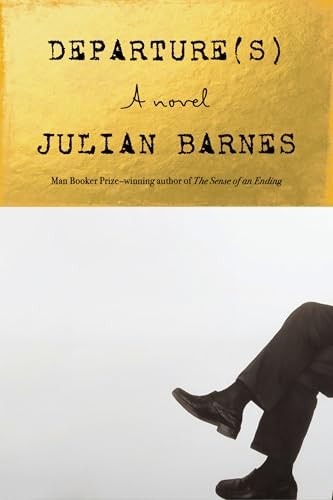 Departure(s) by Julian Barnes. This is a beautiful book that took me by surprise. I hesitate to call it a novel because a fictional plot (or what may be a fictional plot) is only part of it. It is, in addition, a memoir and an essay focussing on philosophy, with ongoing references made to Proust, Baudelaire and Virginia Woolf amongst others. It is, indeed, a blend of these genre told in five sections. But no matter what genre is focussed on, the author is always present. It is as if Barnes is talking directly to us, and even in the fictional sections – recollections of two friends’ relationships with each other, forty years apart – he accentuates his own role in their relationships. But the book is primarily about memory and departures. It starts off as an exploration of memory, with a fascinating distinction made between voluntary and involuntary memory – voluntary memory when we choose to recall an occasion; involuntary, when a smell or sight or sound (for example) triggers a recollection. But the concept of memory within the book mainly exists as a point of difference between humans and other animals, and that memory ceases when the ultimate departure (death) happens. But end-of-life is not the only departure explored in the book. It is also about the end of relationships, and (principally) the end of an authorial journey as the writer tells us on page 9 that “this will be my last book” and bids us farewell at the end and hopes that “you’ve enjoyed our relationship over the years”. All of this is told within the revelation made in the middle section that the author (referring to himself as Jules) has been diagnosed with a form of leukaemia that could be fatal but is manageable. If all of this sounds dire, depressing and depressing, it is not. Told in a conversational style, much of it is anecdotal in tone and even humorous. As mentioned previously, it is as though Barnes is talking directly to us. I will, however, suggest that if the reader is of an age where death and dying (the ultimate departures) and the occasional failing memory are a common occurrence in one’s life – as they are in mine – you might get more out of the book. I wonder what its impact might have been on me forty years ago?
Cold Sunset by William Boyd. As with all of Boyd’s novels – both his ‘whole of life’ and his espionage novels – this is a hugely enjoyable read. It completes a trilogy of espionage novels featuring Gabriel Dax, a travel writer turned reluctant spy for MI6. This time, Dax has to help expose the wrong-doings of double agents, first in America and then in the Soviet Union. One is a former KGB agent living as an academic in mid-west America; one is an MI6 agent posing as KGB in Moscow; there are probably more. And sitting behind the antics of all agents (just as she did in the first two novels of the trilogy) is Faith Green, Dax’s handler and sometime lover who he cannot say no to. But is she all that she asserts? Even Gabriel has his doubts. Set in the early 1960s, this is the time of Kim Philby’s exposure as a Soviet spy in the middle of the Cold War. People in Britain (especially politicians) are obsessed with the exposure of moles (referred to as ‘termites’ in this novel) and the events of Cold Sunset feed into this. Boyd can plot and tell a story more engagingly and succinctly than almost all other novelists that I read; he can bring out the details of his exotic locations (from London and rural England to California and the American mid-west to Moscow and the Russian-Norwegian border to an idyllic Greek island) with amazing clarity; and he can point to the moral ambiguity that must sit behind any good spy novel with exactitude. By the end, Dax (basically a peace-loving man who smokes and drinks too much) wonders how he has been able to kill at least three enemies and help dispose of their bodies. I read this novel straight after completing Marlon James’ The Disappearers. Reading Cold Sunset was like taking a stroll in the park compared with clambering up James’ hugely challenging but satisfying mountain. But it was a very enjoyable and sometimes thrilling stroll at that. You do not need to have read the first two novels of the trilogy (Gabriel’s Moon and The Predicament) to make full sense of Cold Sunset, but it would help.
The Weight of Angels by John Boyne. This is a hugely enjoyable and sometimes very moving novel. As a huge fan of Oscar Wilde as a writer and a wit, of ‘what if’ novels as a genre (Dominion by C.J. Sansom is a standout for me), and of John Boyne as a novelist, I was excited at the prospect of immersing myself in this 600-page epic. And immerse myself I did. It is based on the supposition that Wilde had ignored the Marquess of Queensbury’s nasty and provocative note in 1895 and hadn’t gone to gaol but instead lived until 1953, producing nine plays after The Importance of Being Earnest, numerous novels and volumes of poetry and even an Oscar-winning movie, and living through two world wars and four coronations. As such, it is fascinating. We read of Wilde – the irascible wit, rascal, aesthete, raconteur and outspoken homosexual – and his interactions with high society (including the rival lovers of Edward VIII), with fellow writers (from George Bernard Shaw who he despised to Noel Coward and Agatha Christie who he adored), with politicians (especially Winston Churchill who he supported closely), with actors (notably Katherine Hepburn during a stint in Hollywood and John Gielgud who he meets in a very compromising situation), and even with royalty (his brief interactions with a young Queen Elizabeth on her coronation day and 4-year old Prince Charles are poignant to say the least). But we also read of Wilde the lover, the father and the mentor to many, with these interactions generating some of the most moving and memorable moments in the novel. I wasn’t sure about the novel to start with – the first quarter appeared to be Boyne manipulating Wilde’s life for effect rather than regenerating it – but by a quarter of the way through, Wilde seemed to live fully as I believe he might have. If only this had happened. I will think very much of ‘what if’ when I visit Wilde’s tomb in the Parisian cemetery Pere Lachaise in early 2027.
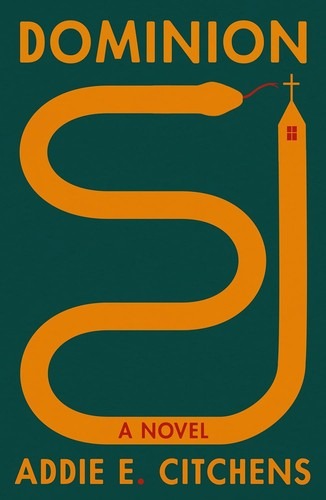 Dominion by Addie E. Citchens. I admired and liked this short, debut novel without loving it. Set in the fictional town of Dominion in Mississippi at the turn of the millennium, it focusses on a well-to-do black family (father, mother, five sons) who dominate the town as both church and business leaders. But we soon begin to see the dark side of this highly respected family: the hypocrisy of the father (Sabre Winfrey, known as The Reverend) as he indulges in extra-marital affairs and mistreats his wife badly; the antics of the pill-popping mother (Priscilla, known as First Lady) as she largely ignores the darkness that surrounds her; the insipient violence contained within the psyche of the seemingly heroic younger son (Manny, known as Wonderboy) who is the catalyst of many turning points in the story. But it also focusses on the life of Manny’s girlfriend Diamond who comes from a totally different background and who appears to be doomed to suffer from her links to the Winfrey family. Told largely in the first person by Priscilla and Diamond with some stream-of-consciousness from Manny, this novel ultimately explores the sense of entitlement and hypocrisy exuded by the more wealthy characters, the subjugation of several women in a largely patriarchal community, the violence simmering under the surface in such a community, and the glimmers of hope as some female characters determine exit strategies. So why did I not love this novel? Although beautifully written (with elements of humour and some wonderful metaphorical language) and cleverly structured, it did not go into sufficient depth for me. Some key turning points (such as a murder in the middle) are not given much detail, and the denouement (which I had guessed) came on suddenly. Although set forty years earlier, it covers similar territory to Tayari Jones’ Kin which I found far more satisfying because of its greater emotional charge. I would have liked even more character exploration in Dominion. On the other hand, it was a good and enjoyable read.
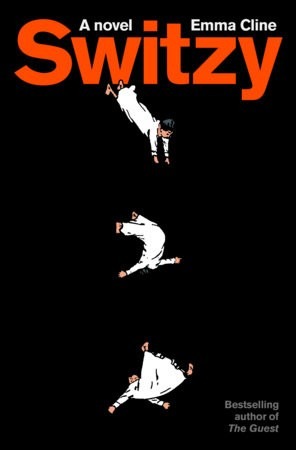 Switzy by Emma Cline. I read this novel because it had been longlisted for the 2026 Booker Prize and because I had loved Cline’s first novel, The Girls. But I was worried. I knew it involved an older man (David Hastings) with extreme dementia moving toward death at a euthanasia clinic in Zurich, and having a close friend move recently into a dementia unit, I worried that it would upset me too much. I needn’t have worried. For, ultimately, I found the novel to be positive and life-affirming. And beautifully written. There is a basic plot – David (accompanied by a young companion Cody) journeys from America to London (to touch base with his estranged daughter Rebecca) and on to Zurich to not only arrive at the clinic but also make amends with his school friend Tom who he felt he had failed in their teenage years. But what stood out for me is how we get to know this man with extreme dementia along the way: his ability to recall and partially analyse big events from the past despite his dementia; his inability to undertake the simplest of everyday activities such as entering a room or tying a shoelace; his hugely diminished social skills with both old acquaintances and strangers; his acceptance of what is happening to his mind and the inevitability of an imminent death. And Cline, as a stylist, depicts his dementia in a very clever way. Told in small (sometimes very small) segments with double/blank spacing between them, she depicts the randomness of his thinking from time to time as well as the white spaces that are in his mind through the layout of the text. Just as I wondered whether I would like Julian Barnes’ end-of-life novel Departure/s if I was 30 years younger than I am. I felt the same about this novel. Could I have related to a novel that confronts death so vividly if I was a younger man? But whatever, I did hugely enjoy and appreciate it and recommend it highly to readers who feel that they could cope with its content. Go on the journey with David if you dare.
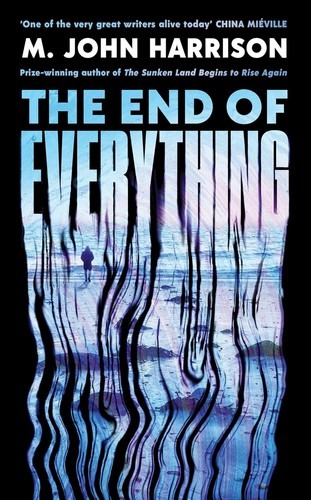 The End of Everything by M. John Harrison. Yes, this post-apocalyptic novel (longlisted for the 2026 Booker Prize) is indeed “dreamlike and baffling” (as the Guardian reviewer described it) but it intrigued and almost mesmerised me until the end. And I say this as a reader not normally fond of reading science-fiction. The Guardian reviewer went on to describe it as “brilliant” though this is not an adjective that I would have used. Set in the near future, mainly along the Kentish coast in the UK, the world has changed. An unknown disaster has occurred, meaning that England is mainly government-less, the worldwide web and media have largely disintegrated, continental Europe has mysteriously vanished and alien but friendly entities (iGhettis) have invaded England from the sea. But life tries to go on as normal – tourists from London occupy the myriad of run-down hotels and guesthouses that stretch along the Kentish coast. Across this bleak landscape, Phillip and his elderly artist aunt Marnie try to survive, often with difficulty. Metaphysical and metaphorical events – some unexplainable – get in the way. So why was I so intrigued by this novel? I return to the Guardian reviewer who suggested that it “exposes the terrifying existence of life right now” and that it “elucidates humanity’s disintegrating existence”. Yes, I could see today’s fragile world within the dreamlike events. This novel won’t be for readers who want realism and clarity – there were sections in which meaning totally escaped me – but overall, it left a strong impression on me.
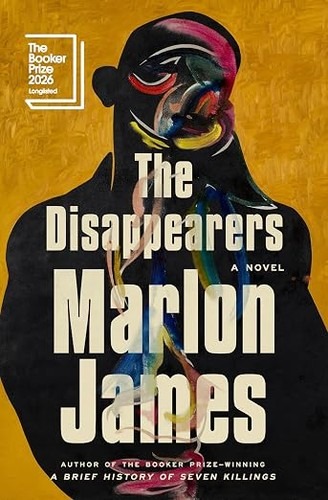 The Disappearers by Marlon James. This mammoth novel, featuring the gay experience and murderous homophobia of 1980s and 90s Jamaica, is extraordinary. It is raw, it is brutal and it is full of rage and anger. But it also has heart and humanity. In 1988, a group of eight gay men are rehearsing a play (Fortune and Men’s Eyes by John Herbert) when they are viciously attacked by a disparate group of homophobes for no reason other than that they are gay. One dies; one is blinded; two vanish; the others are all left physically and emotionally traumatised. We learn about the pre-attack lives of these men through the diaries of both the youngest and the oldest; we learn about their post-attack lives (especially their attempts to become avenging angels and to support each other) through letters, interviews and stream-of-consciousness reflections offered by most of them; and, disturbingly, we learn about the religion-driven thinking of the perpetrators directly through their words. Yes, it is full of sex and violence (even in their pre-attack lives, violence is all around them as these men live their lives as either closet or out gays), but none of the sex and violence is gratuitous. It is the world they live in. it is confronting, but this is a novel that sets out to confront us. Being set in the 80s and 90s, it is also about AIDS and the fuel that this disease gave to homophobes of the time. Its language can only be described as visceral – it is raw and real but also poetic. And being set in the Caribbean, it is sometimes told in patois, but this is not difficult to understand. Ultimately, to me, it is a clever blend of Irvine Welsh’s Trainspotting and Hanya Yanagihara’s A Little Life, and I highly recommend it if you feel that you have the stomach to take it on. A reviewer in Good Reads described it as “a steep mountain to climb, full of dangerous winding roads and unexpected challenges” but added that “the view from the top is worth it”. I agree. It shouldn’t just be classified as ‘a gay novel set in Jamaica’; its themes could readily be applied to any sector of society that believes that it has power over others and ultimately the right to dominate them.
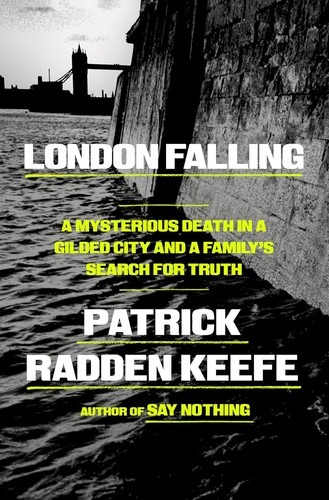 London Falling by Patrick Radden Keefe. Set in London in 2019 and subtitled A Mysterious Death in a Gilded City and a Family’s Search for Truth, this non-fiction narrative is a dark but highly readable tale of money, lies and avoidable tragedy. I whole-heartedly agree with the Guardian reviewer who described it as “grimly absorbing from start to finish….and a real page-turner”. It recounts and explores how a 19-year old upper-middle class Jewish boy (Zac Brettler) became a fantasist (passing himself off as the orphaned son of a Russian billionaire oligarch) and developed friendships with some of London’s more extreme conmen and gangsters. This led to his untimely death by falling from the fifth-floor balcony of a luxury apartment building overlooking the Thames. Who was with him when he died and what actually happened? Was it suicide? Was he murdered? Was he coerced? These are questions that Keefe investigates, encouraged by Zac’s very frustrated parents who are dissatisfied with the police and coroner’s investigations. Answers are unfolded and presented step by step, keeping us totally engaged. But the book is more than an investigation of an untimely and unexplained death. It is also an exposure of the worst of contemporary London, presented as “a matrix of power and secrecy and corruption” where excessive wealth rules. It is not just Zac who fell; it is also the city of London. I am not surprised that the book, which started as an article in The New Yorker, has become an international best-seller.
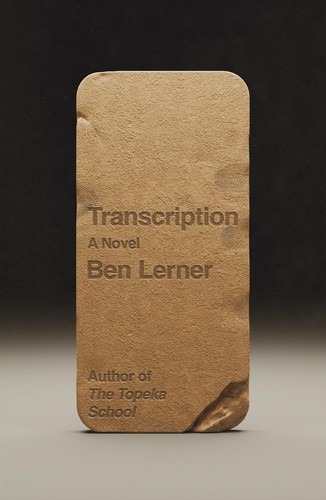 Transcription by Ben Lerner. This is a very elegant novel. Elegant, because it is divided into three well-balanced and complementary parts of a portrait being built in words, almost like three movements of a symphony or a triptych of three richly painted oils. The portrait is of a ninety-year-old German intellectual (Thomas) and his relationship with an un-named ex-student who regarded Thomas as his most influential mentor. The first part (set in Providence, Rhode Island) involves the ex-student trying to undertake what might be Thomas’ final interview but accidentally destroying the means of recording just before the interview takes place. The second part (set in Madrid) involves a group of Thomas’ friends recalling their connections with Thomas at a symposium designed to celebrate his life, and their shock of discovering that the published interview was based on recollections rather than a transcript. And the third part (based in Los Angeles) involves the ex-student and Thomas’ son Max discussing their family lives. But the novel is much more than just the building of a portrait. It is about miscommunication (often caused through misuse of technology, it is about memory and the confusion that it sometimes creates, and it is about the tensions within family and inter-generational relationships. And, most movingly, it is about the impact of the recent pandemic on peoples’ lives, especially Thomas’. But, above all, it is about the building of the afore-mentioned portrait with Lerner making beautiful connections between the content of the first few pages and the content of the final few pages to give the sense of a life well-rounded. Yes, there were times when I pondered on the relevance of particular details – why, for example, was so much attention given to Max’s daughter’s eating disorder? – but overall, I found the novel to be very satisfying.
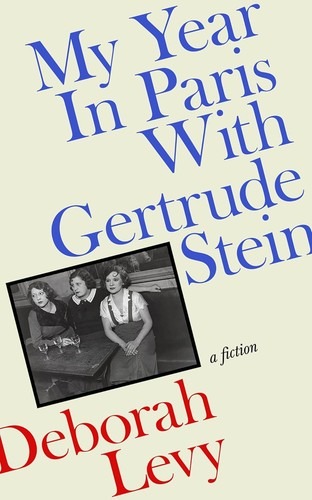 My Year in Paris with Gertrude Stein by Deborah Levy. Levy describes herself as a novelist of ideas. Being a fan of strong plot-lines, I felt that I shouldn’t have enjoyed this novel. But I did. This is mainly because many of the ideas are contextualised within the life and thinking of Gertrude Stein and her companion/wife Alice B. Toklas. Stein, a character who has always intrigued me, was best friend of Picasso and Hemingway, a writer of prose that attempted to be the textual equivalent of cubism, modernism and fauvism, and a survivor of Nazi-occupied France despite being Jewish and lesbian. Set in Paris in November 2024 (the month of Trump’s re-election), the novel is not strong on plot, but it explores instead the day-to-day lives of its three main characters over the month. They are three female, middle-aged, close friends: one a graphic artist, one an economist, and one the un-named narrator (who may or may not be Levy herself) writing about Stein. We learn about their lives sometimes directly (when, for example, Eva the graphic artist’s cat goes astray, or when the three friends encounter Jean-Luc, a potential suitor, in their pursuit of the cat) but more often through life reflections presented about Stein and her thinking. From time to time, their lives are mirrored in Stein’s life. I found the Stein-related sections of the novel (and there are many) to be its most engaging.
Said the Dead by Doireann Ni Ghriofa. This book is difficult to define – partly a novel (almost a ghost story); partly a recount; partly a personal memoir. For it is propelled by the Reader – a woman in contemporary times who becomes obsessed by the past and the (mostly real) characters who inhabit it at a particular point in time. Why this obsession? Because “the river of voices had been both comfort and company to her through a difficult time”. Set around a ‘lunatic asylum’ in Cork, Ireland, largely from the 1890s to the 1920s, the Reader imagines (on discovering the derelict building that housed the inmates and is about to be transformed into a row of luxury apartments) that she could easily have been an inmate herself in the said building under different circumstances. But, by the end, we realise that the Reader is in fact the author who represents us as readers. It is ‘our’ story being told. This sounds complicated but it is not. For basically, it is a social history of the times – Lucia Fitzgerald (the first female psychiatrist in the British Isles, at that time incorporating Ireland) records the mostly tragic lives of female inmates through the aftermath of the great Irish Famine, during World War One and amidst the cruelties of the civil war that led to the establishment of the Irish Republic. Their lives are linked to the Reader’s life and eventually to our lives as readers. It is a compelling tale told through a clever blend of narrative, poetry, letters, photographs and artifacts. And it is a story of how the ghosts of the past insidiously generate the world we now live in.
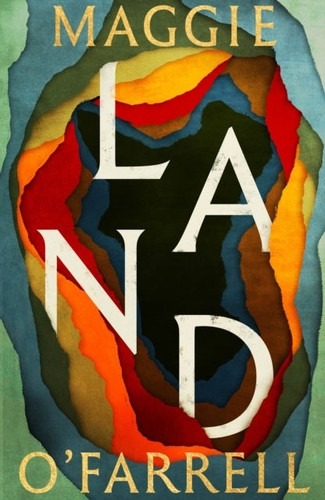 Land by Maggie O’Farrell. Set principally in Ireland (but also across the world) and beginning in 1865 (ten years after the Great Hunger that largely emptied Ireland’s countryside of people), this epic novel is a family saga that focusses on the diverse lives of Tomas and his wife Phina (having met and escaped together from a Dublin workhouse) who set up life with their two sons (the youngest of whom is non-verbal) and two daughters in a poverty-stricken, rural Irish community. It becomes a real page-turner as they experience love, death and spiritual awakening. Yes, the ending is a little nebulous and there are slightly too many plot coincidences for my liking, but on the whole, I found it very satisfying and engaging. And the context in which the saga is delivered – nineteenth-century Ireland dominated by poverty, conflict, colonisation and religious fervour – adds another layer to the novel. Just as Dickens brought the slums of mid-Victorian London vividly to life in his array of London-based novels, so O’Farrell brings the poor, Irish mid-nineteenth-century countryside (the land that Tomas and his oldest son Liam must map for the British army) vividly to life for contemporary readers. It did not surprise me to read that the novel is loosely based on the lives of O’Farrell’s great-great-great grandfather and his family and had been in her mind for ten years. Near the beginning, I wondered if the novel would actually engage me – the orientation of characters, setting and events is set up with a great deal of detail – but from page 80 onwards, I was hooked. I didn’t enjoy it quite as much as I enjoyed O’Farrell’s acclaimed Hamnet, but I enjoyed it far more than I enjoyed her last novel The Marriage Portrait. I recommend it and suggest that she is a very powerful writer.
 The Renovation by Kenan Orhan. This is an extraordinary and (on the surface) bizarre novel. It features a Turkish family (Dilara, her husband and her father with Alzheimer’s) living in political exile in Italy and undertaking a renovation of their bathroom to help accommodate Dilara’s father into the family. But, on entering the renovated bathroom, Dilara discovers that it is no longer a bathroom but a Turkish prison cell complete with guards and fellow prisoners. She can walk into the cell and find herself in politically oppressed Turkey but then back into the main rooms of her apartment in contemporary Italy to face her father’s progressively worsening dementia. It sounds surreal, but it all works. For we realise that the prison cell – acting as a two-way portal – is not only a metaphor for existence under political oppression (life under Erdogan’s authoritarian rule is vividly portrayed) but also for life as a caregiver for a person living with dementia. The challenges and difficulties of undertaking this role are also vividly and movingly portrayed. But even though Dilara is forced to live in exile, it is also a novel about the pull of the motherland. Despite imprisonment and oppression, Dilara feels a magnetic pull to the Turkey of her memory and this drives the novel to a very powerful end. I would never have read this novel if it had not been longlisted for the 2026 Booker Prize, but I am very pleased that I did.
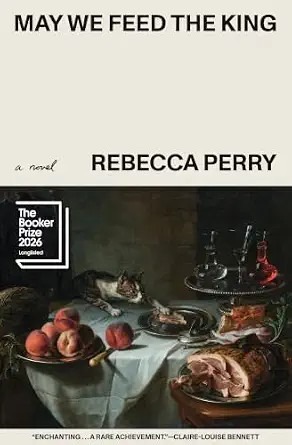 May We Feed the King by Rebecca Perry. This exquisite little novel (although it is 250 pages, it is told in very short chapters with minimum fragments of text on many pages) is ultimately about the unknowingness of the past and the malleability of historical records. It is fascinating. It is told in two parts – the long middle of the novel relates to the reign of a very reluctant king in medieval times; but his story is bookended by the thoughts and experiences of a museum curator whose task is to establish and dress rooms in a museum that will feature an exhibition of the king’s reign. But it is not a straightforward account of the king’s reign, nor is it a straightforward exploration of setting up the exhibition. For, although we are given copious (and very interesting and engaging) details of the king’s reign, we know nothing about who he was, when he reigned or even where he reigned. We are not even really sure about whether he really existed, though we suspect he did because his story is so vividly told. Or is it just a fictionalisation of possibilities, just like the curator’s dressed rooms? Toward the end of the novel, the curator asks a group of visitors to the exhibition: ‘How do we know anything about history?’ This, to me, is what the novel is all about. Can we be objective or truthful about what has happened in the past or, indeed, to people around us? Although very different, it asks the same questions as Patrick Radden Keefe asked in London Falling: what really caused the death of the central character? Despite its complex themes, May We Feed the King (longlisted for the 2026 Booker Prize) is very easy to read and I recommend it, especially if you hold an interest in historiography or the way history has been written, interpreted and changed over time.
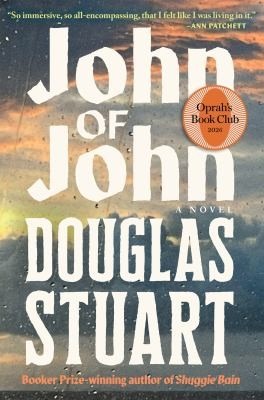 John of John by Douglas Stuart. This, Stuart’s third and arguably best novel, is deeply impressive. I say that as a huge fan of his first two, Shuggie Bain and Young Mungo. Set in the mid-1990s, it completes a triptych of working-class Scottish life in the late twentieth century. Scotland in this novel though, is not Glasgow. Instead, it is the Outer Hebrides islands (Lewis in particular), populated mainly by Gaelic-speaking, strictly Calvinistic tenant farmers and their families. John-Calum Macleod (referred to as Cal) has been instructed by his father John to return home after four years’ study of art and textile in Edinburgh to tend to his elderly grandmother. How will this 23-year old gay man fare as he is forced to confront a harsh world of secrets and lies within a community of family and friends, all fellow-congregationalists of the Free Presbyterian church he attends? The secret he is holding from his father is nothing compared to the secret that his father is holding from him. After a reasonably slow start, the plot explodes and doesn’t resolve itself until the final pages, much like the engrossing plot of Paul Murray’s wonderful Irish family saga The Bee Sting or the best of Martin McDonagh’s films and plays. A New York Times reviewer described the plot as “a stick of dynamite waiting to go off in your hand”. But Stuart is able to do much more than just tell a good story. Themes of connection, hypocrisy and emotional sterility reverberate from the immersive plot; diverse characters are richly portrayed with resonating back-stories; and the setting (so important to the plot) is evoked so vividly that you feel you can not only see it but even touch and smell it. Some reviewers have criticised the novel for being ‘too melodramatic’; I, instead, regard it as an outstanding blend of engaging plot, rich characterisation, strong authorial style and vivid setting. It had me guessing until its final pages: will it end with tragedy or hope?
What do you think? Share your thoughts...