For three months between Feb-April 2024, I have been living and working in Sweden, employed by Stockholm University as ‘guest lecturer’. This post is the first of a series that discusses some of the highlights of my time there.
In addition to the Professional Development I’ve been undertaking in Finland, and along with the various lectures I’ve been giving to undergraduates, I also began a research project on writing with a delightful class of twelve students with mild/moderate intellectual disabilities.
Students are aged 12-16 years and all are so eager to learn. They have a moderate level of English language but they’re all prepared to have a go.
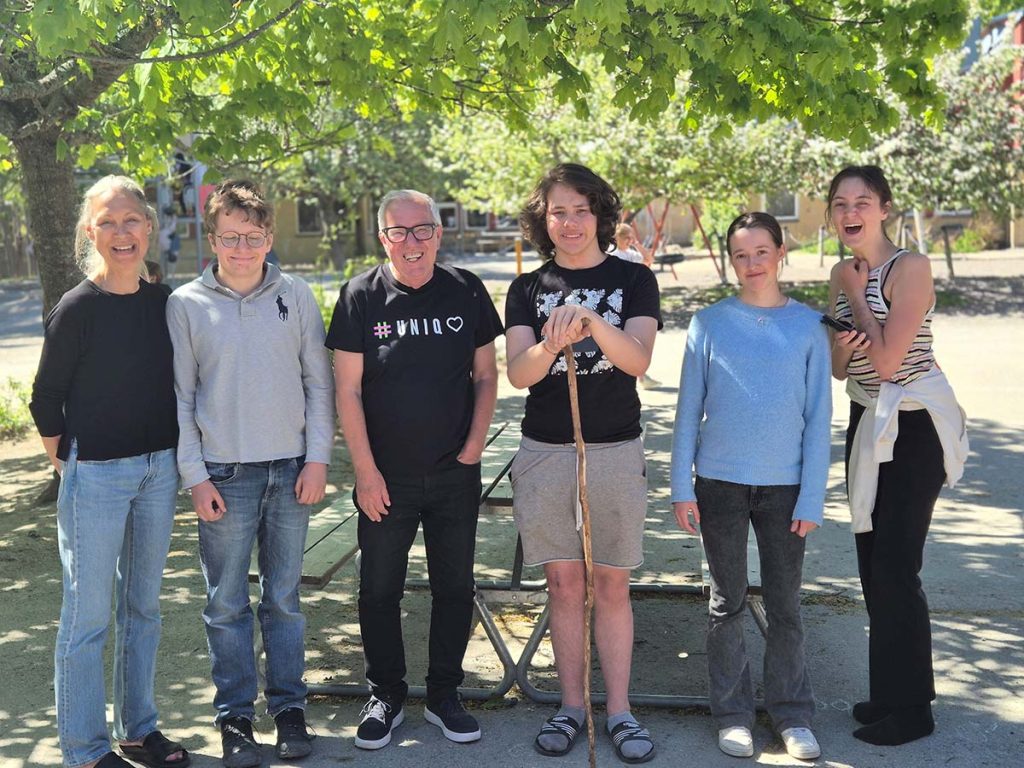
Here is a photo of me, one of the teachers (Karina, on left) and some of the students.
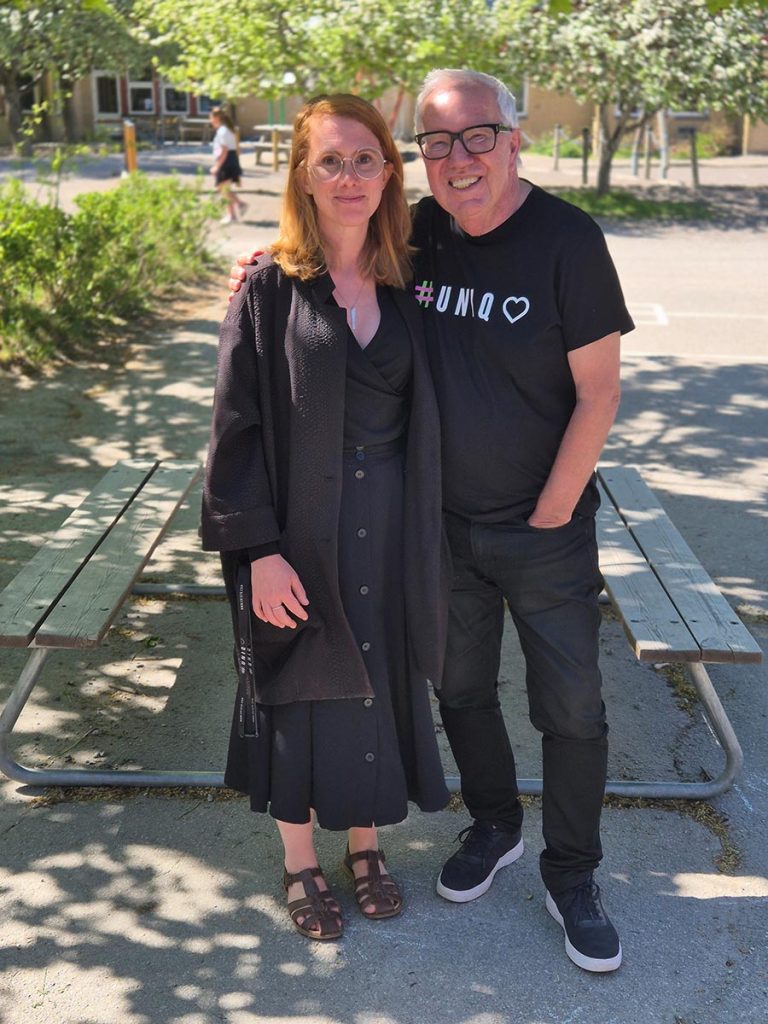
I’ve been working with a fabulous principal (Denice) at the school just out of Stockholm.
She and her teachers observe each session I take with the students and discuss it in detail afterwards.
Here is a photo of Denice and I.
Needless to say, my task has been to engage and progress the students in writing and our work has been based on the New Zealand teacher inquiry approach that’s currently not in use here. Overall, it’s been working really well.
The students have undertaken some personal writing, some descriptive writing and some imaginative writing. For each set of lessons, I have undertaken:
- Writing launches (what are we going to write about? what could be in our writing? what’s the task? how do we get ready to write? what are our success criteria?).
- Shared writing with small groups.
- Writing workshops on identified needs.
We noted, near the beginning, that students have three main needs in writing: to be able to add detail; use great words; make changes to their writing including putting capitals/full stops in the right places. So we stuck to these criteria no matter what the writing task.
I undertook similar work here with similar but much older students a few years back in Sweden and I have reported on that widely in New Zealand. I’m interested, this time around, in discovering whether what worked for 17-20 year olds with mild/moderate intellectual disabilities will work with 12-16 year olds. The answer is tentatively yes!!
The school is doing some really innovative work with these kids. For example, the kids have set up an on-line shop (called Uniq www.uniq70.com) through which they sell all sorts of personal and clothing items. They have also written and published a book (called ‘Judith’) that is available on the website. They are responsible for managing all aspects of the site and it has won numerous entrepreneurial awards in Sweden.
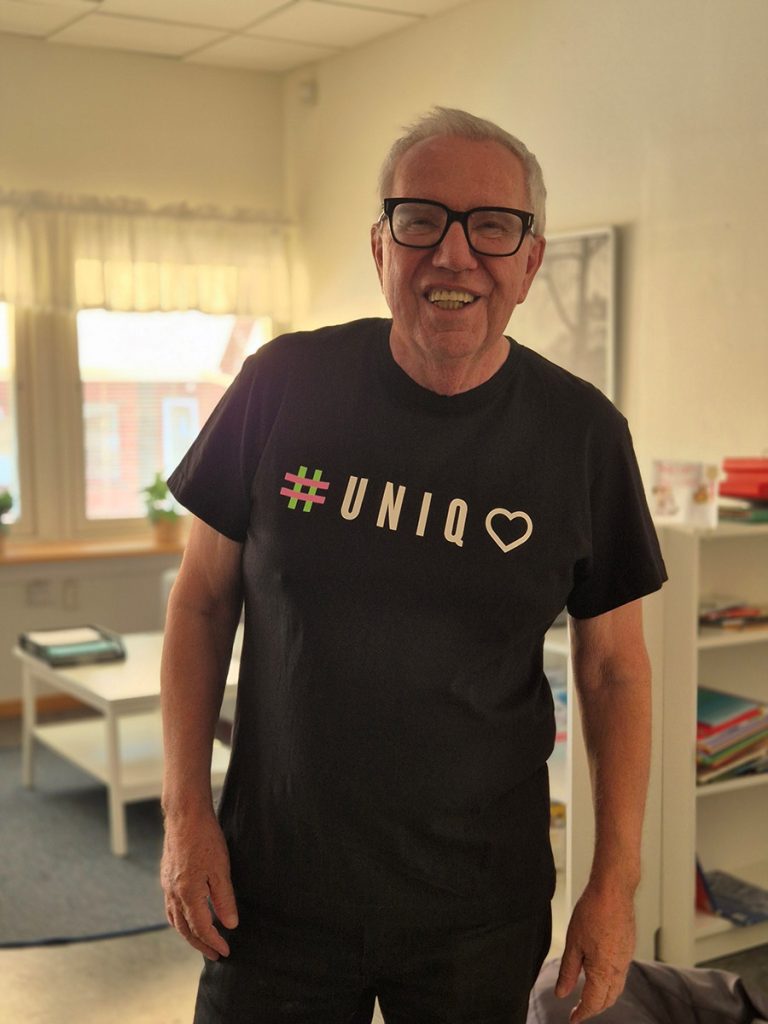
Here’s me wearing a “Uniq” t-shirt that I purchased from the shop.
The students attend what used to be called a ‘special school’ but is now referred to as an ‘adapted school’ because the teachers are required to deliver an adapted version of the regular curriculum. Previously, the focus tended to be more on ‘building social and behavioural skills’ rather than delivering a curriculum.
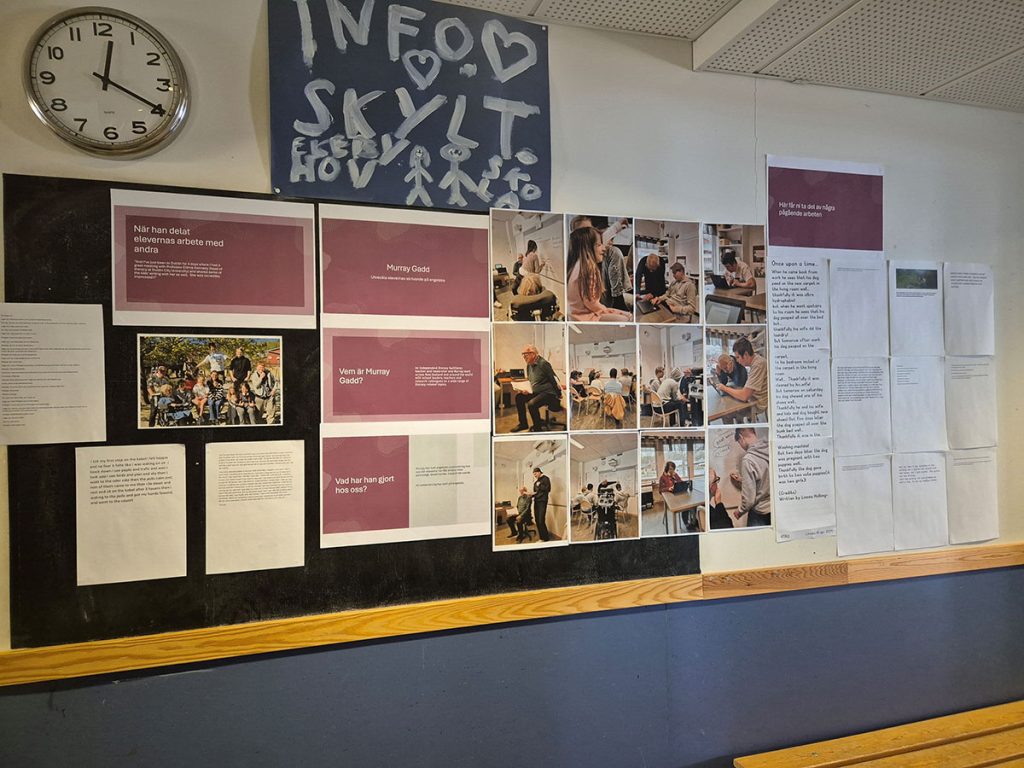
Here’s a photo of a display that Denice put together (for a parent night) of some of my work with the kids, including some writing that they have produced. The parents were very impressed by what their kids are achieving, as am I.
Linda Gray Brett
This is very interesting. Wonder what your thoughts on the reintroduction of charter schools in Aotearoa. Is there a place for schools that adapt the curriculum with programmes like yours? We definitely have problems with teacher capability and consequently, student engagement with literacy.
Thoughts from a recently retired teacher librarian/ literacy specialist.