Jane Va’afusuaga (who I had the privilege of teaching at Wellington College of Education in the late 1980s) now works with small groups of (mainly Pasifika) students at Favona Primary School in South Auckland at building their English language and literacy. Most of her students speak little English for a range of reasons. Jane, of New Zealand European heritage, spent many years living and working in Samoa and knows first-hand the challenges of learning and using confidently a second language (Samoan) in her everyday interactions. Hence she is very committed to ensuring that her students, relatively new to the English language, are able to work proficiently and confidently in English.
She recently shared texts with me that two of her students had written and were very excited about. Jane, too, was excited about what these students had achieved. I share her excitement.
Fileini
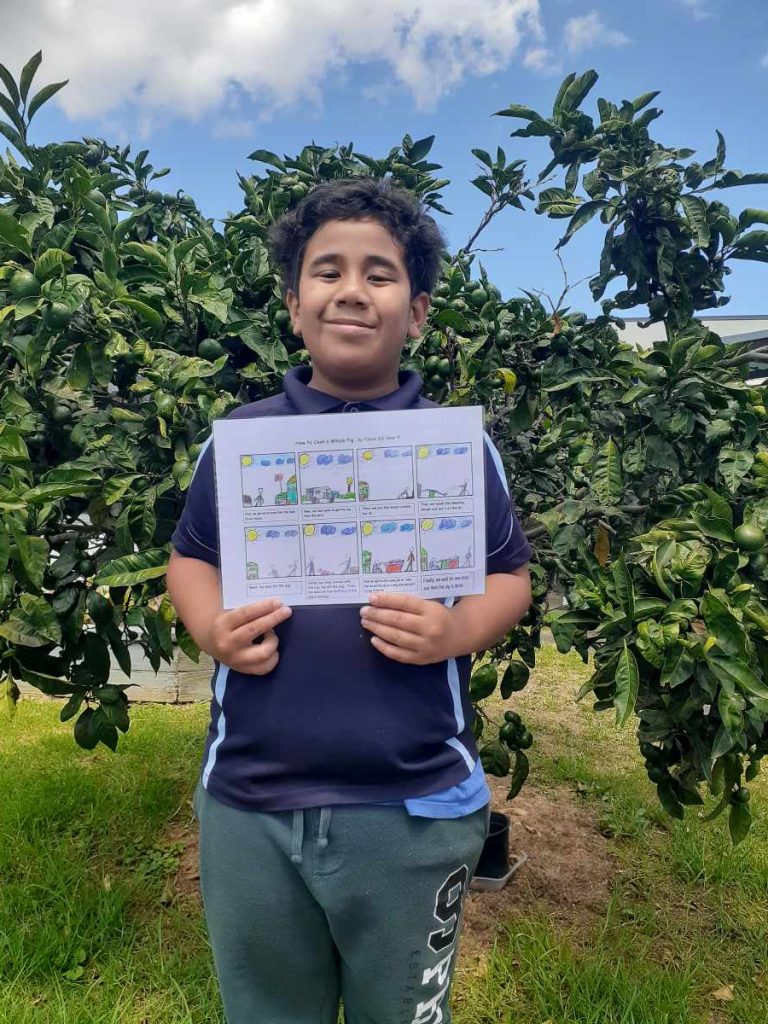
The first is by Fileini, a Year 4 lad of Tongan heritage. Although born in Aotearoa/New Zealand, he could speak only limited English when he began school as his main home language was Tongan. Consequently, he learns in a Tongan bilingual class though works with Jane as part of a small group of English language learners from time to time. Here he is, proudly holding the text that he has written in English.
Jane had shared a photograph with Fileini and his group of a teacher (Whaea Lynn) who they all knew well. In the photograph, Lynn is holding a huge coconut crab which she describes as her “favourite food in all of Niue”. Jane used the students’ interest in the photograph to talk about their favourite Island food and how it is cooked or prepared. As a model, Jane talked about her favourite food as well.
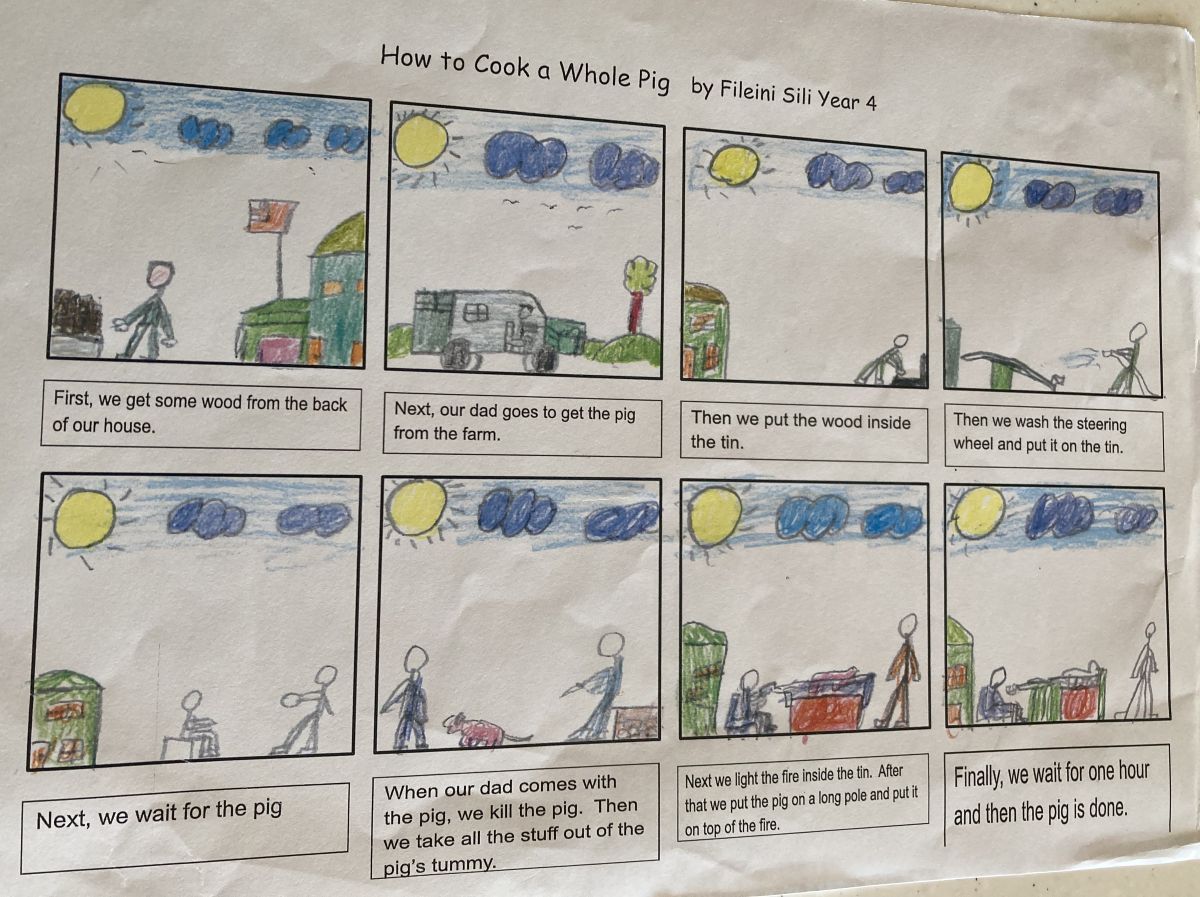
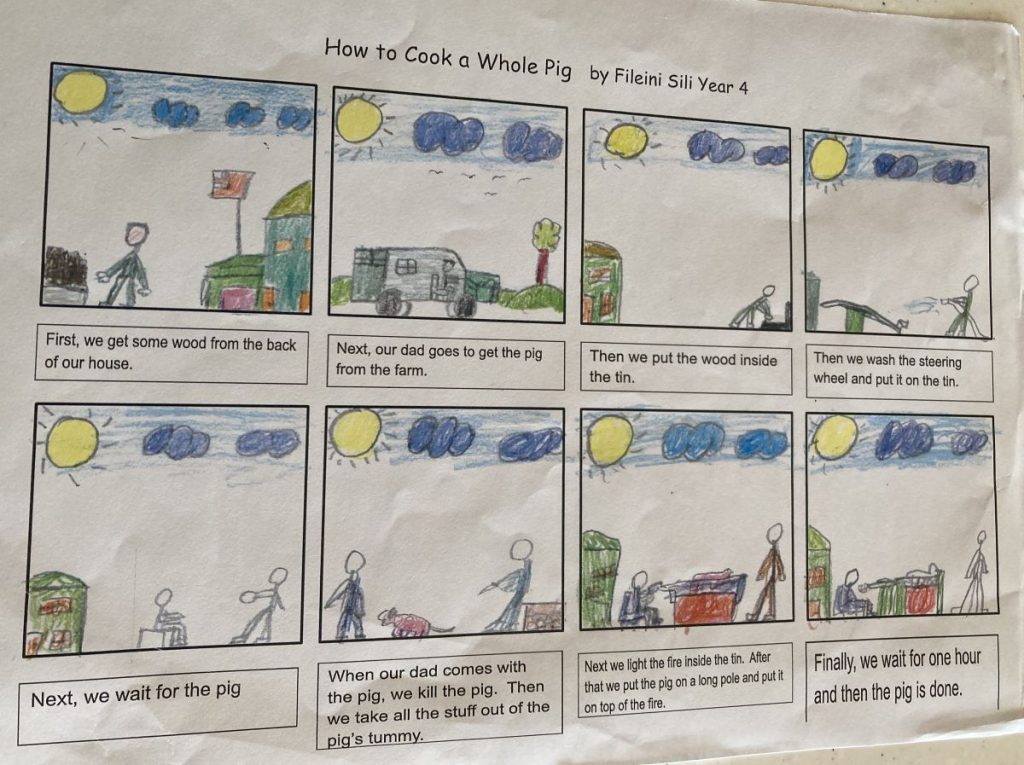
Fileini talked excitedly about killing, cooking and eating a pig as he knew from family experiences. Jane asked him questions about how they went about the killing and cooking process (especially his involvement in it) and encouraged him to be clear and precise about the order of what they did to kill and cook the pig. She then suggested that he write a set of instructions about this so that others could understand the process clearly and maybe even copy the process!! She particularly encouraged him to ‘include sufficient detail’ in his instructions and ‘use some order words’ to help the reader work out the sequence of the process.
Fileini worked hard at this. Here is a copy of his first draft.
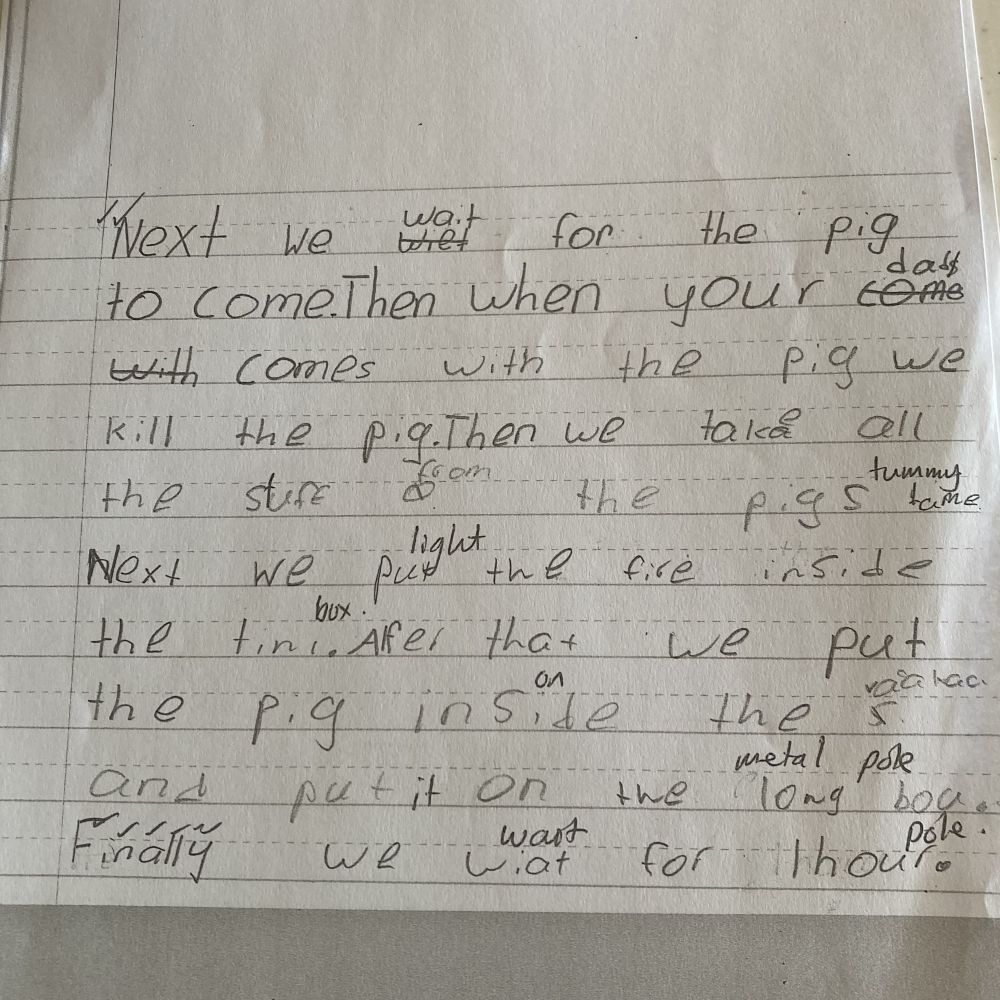
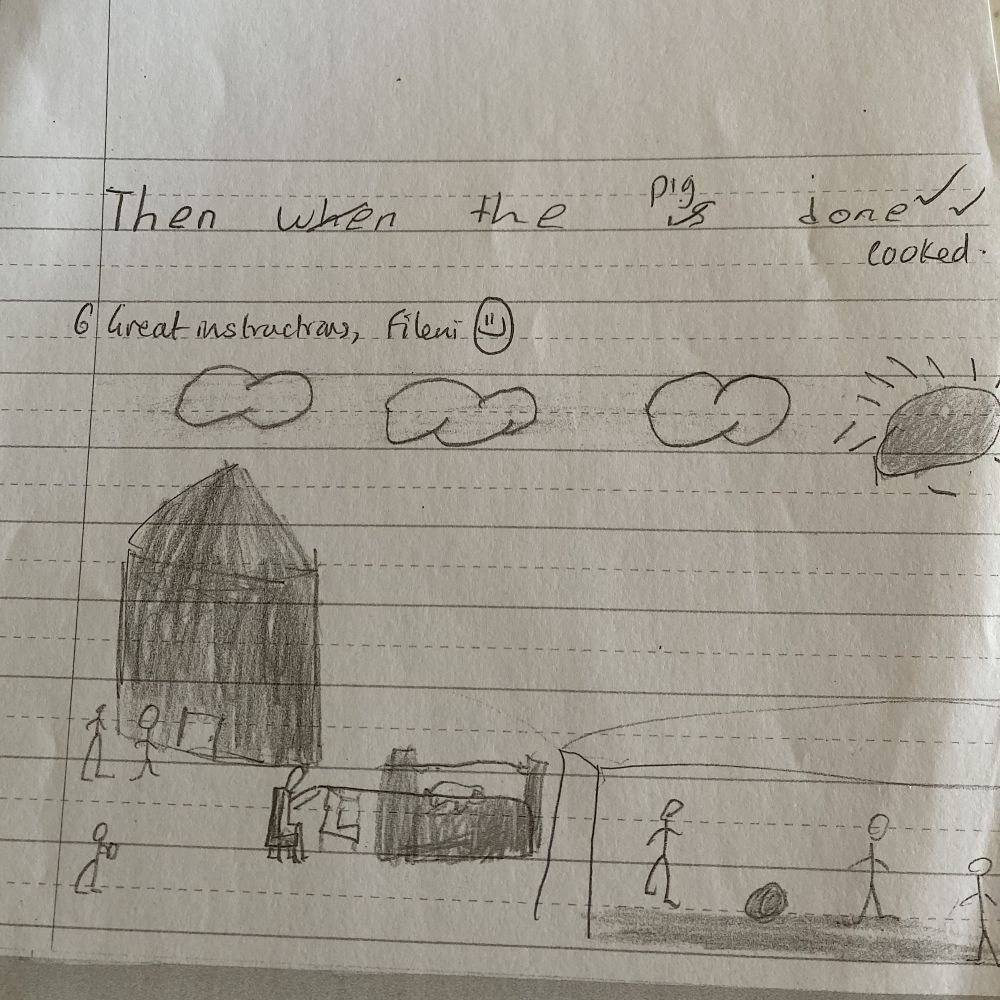
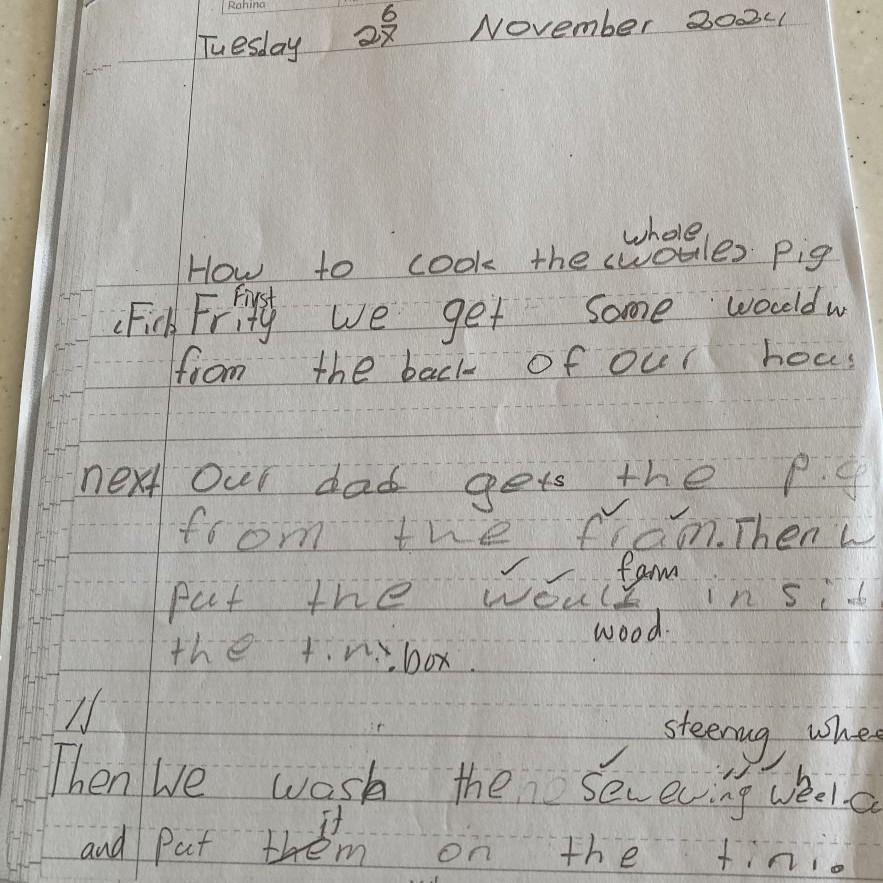
As can be seen from changes made by Jane (in collaboration with Fileini) to the draft, Feleini needs to continue working on adding detail to his writing, using sequence words consistently, and learning some spelling patterns. Like many ESOL students, prepositions sometimes challenge him as well. But, overall, he has written very well indeed – so well in fact that he was excited about publishing his writing and sharing it with others. Note his beautiful presentation of the completed text, combining both illustrations and captions. Great work Fileini.
Jordan
The second text is by Jordan, a Year 2 lad of Samoan heritage. Like Fileini, Jordan was born in Aotearoa/New Zealand. His family speak Samoan and English at home. He also works with Jane as part of a small group devoted to strengthening their use of English language. Here he is, proudly holding the text in English that he has produced.

Jane undertook a shared reading of Don Long’s Ready to Read text ‘Fishing Off the Wharf’ with Jordan and his group. This text is a Level 22 factual recount (with fabulous photographs) of a girl going fishing with her Dad, and the reading really motivated the students to share and discuss real-life experiences they had had of going fishing.
The students were so excited about this that Jane encouraged them to write their own factual recounts. She encouraged them to write about who they went fishing with, what happened, what their favourite fish was and how they felt about the experience.
Here is Jordan’s first draft which he worked really hard at.
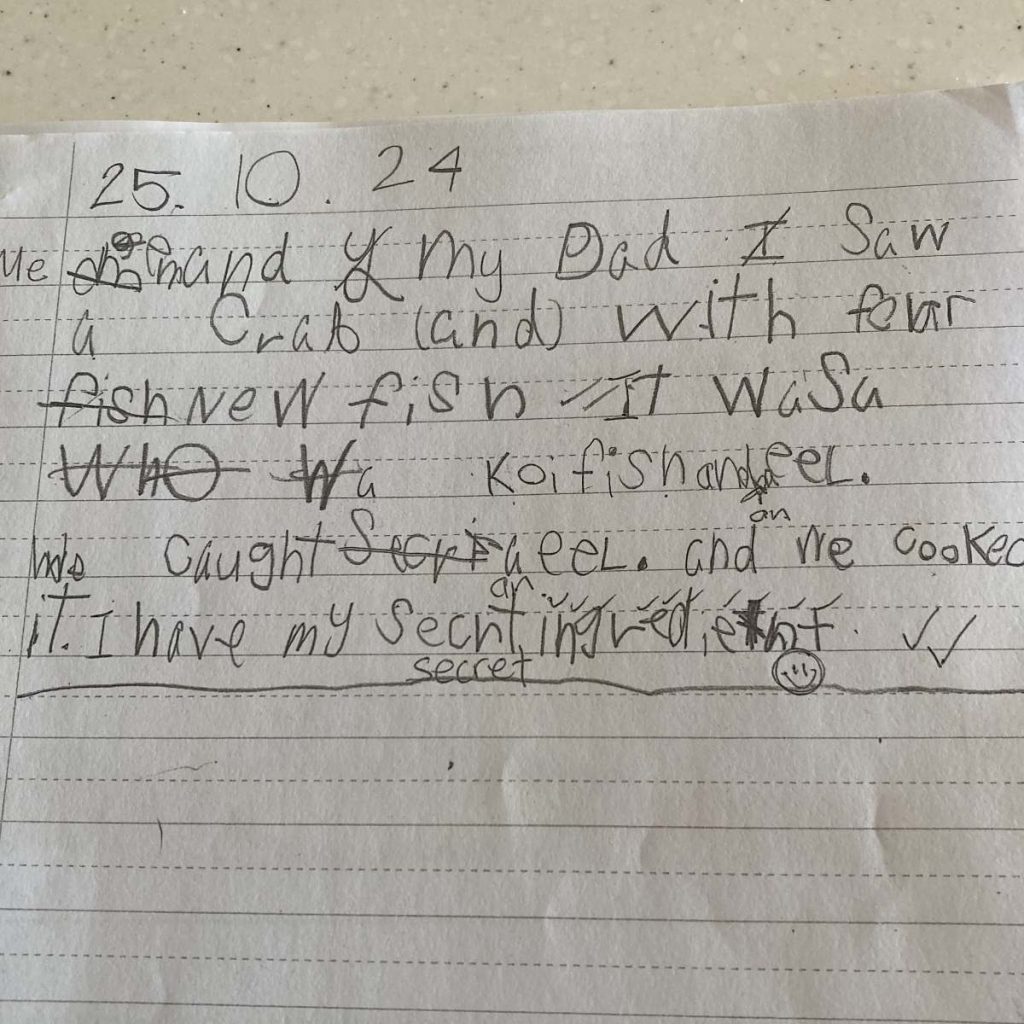
Note how Jane has gone through his writing with him, one to one, and made changes with him so that it flows grammatically. I particularly love the mention of a ‘secret ingredient’ at the end – I wonder what this ingredient is? – and really admire his sounding out and recording of almost all the key sounds in ‘secret ingredient’.
Like Fileini, he was so proud of his writing that he wanted to publish it. And like Fileini, he publishes with a beautifully presented illustration. Note the Samoan flag on the boat, the rising sun and the crab on the side.
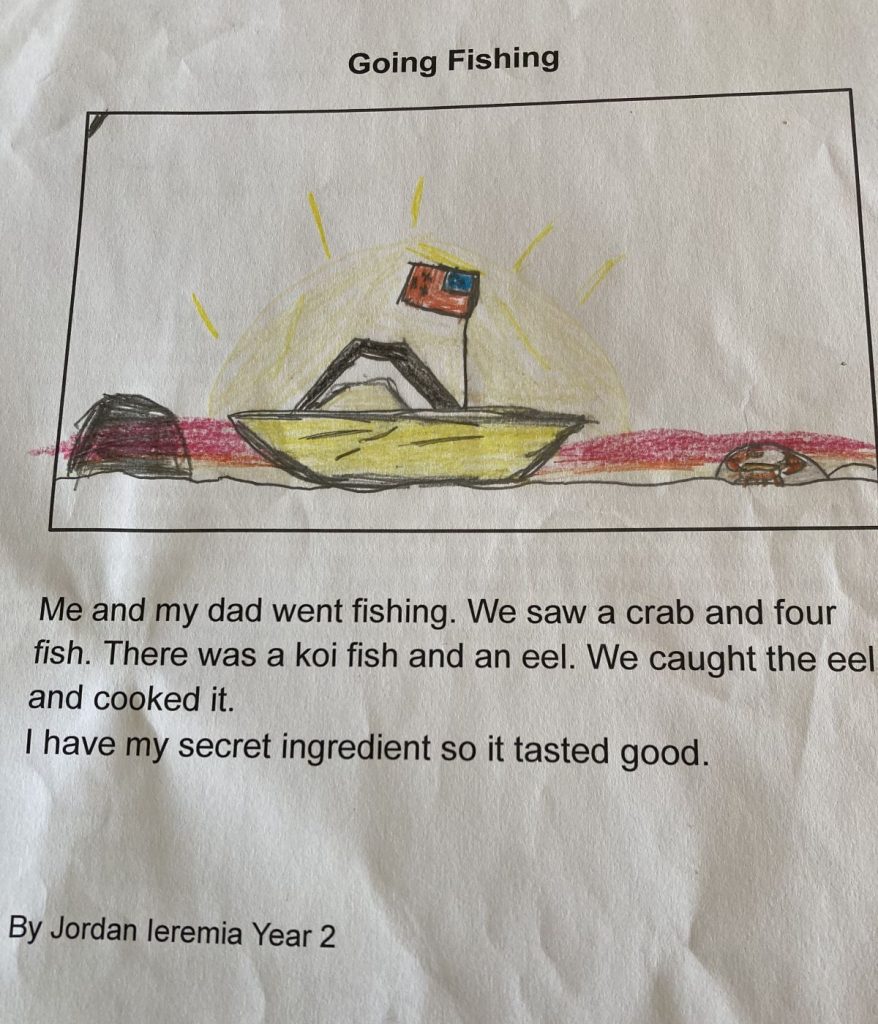
Jordan has done so well. He has written a set of simple and compound sentences – all correctly formed – and he has made good use of the corrections to his draft that he made with Jane. But I particularly like his addition of a little more detail to the ‘secret ingredient’. I still want to know what that ingredient is, but I suppose if I knew, it wouldn’t be a secret any more….. Well done Jordan.
Conclusion
Jane inspired these students with well chosen real-life topics that students could relate to culturally, used oral language (particularly questioning) to build vocabulary and content around the topics with them, and undertook some direct, explicit and differentiated instruction with them around word and sentence formation. Not only have Fileini and Jordan done well; so has Jane.
What do you think? Share your thoughts...