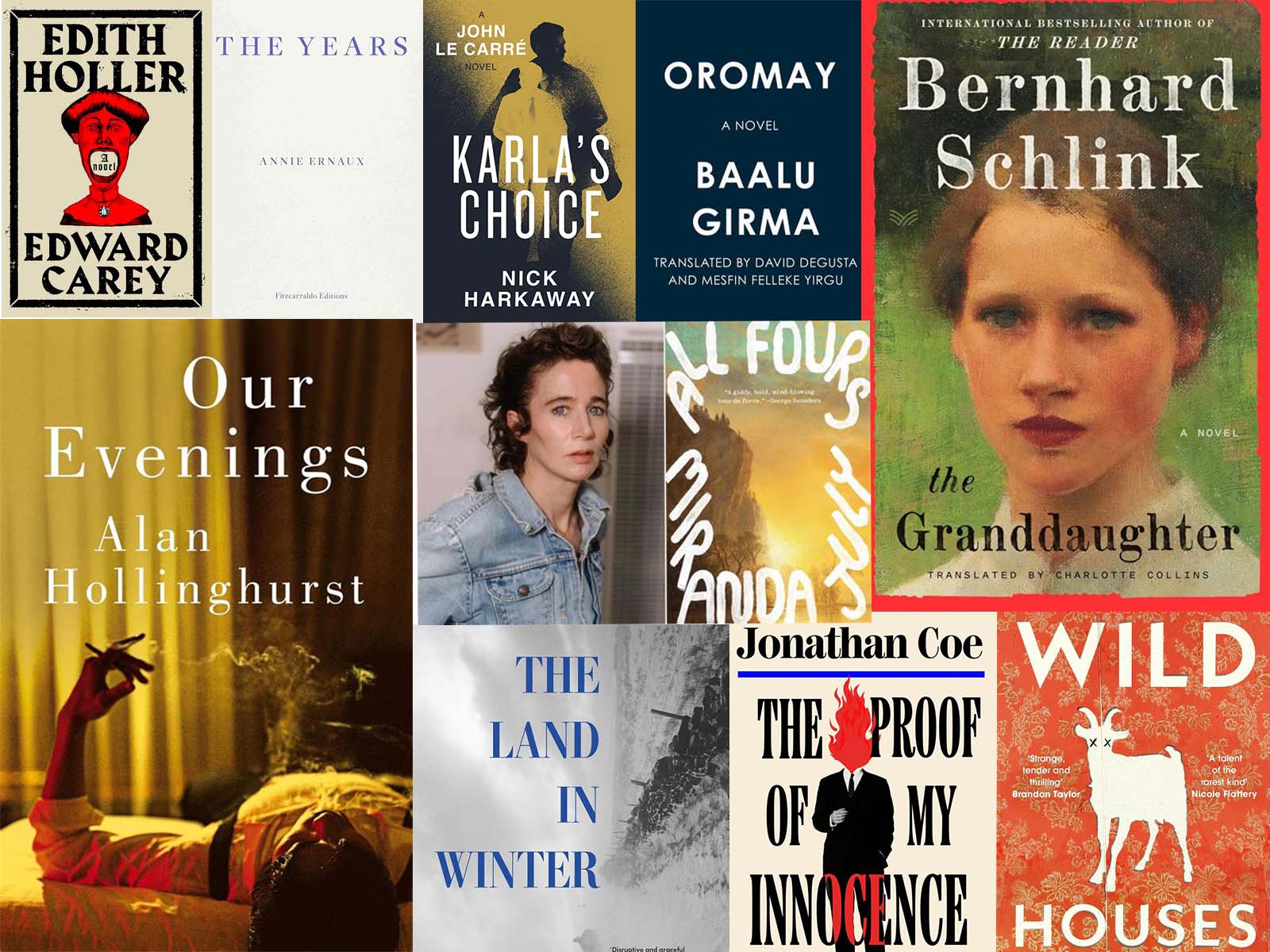
This update is all about the summer reading that I’ve been undertaking; twelve novels in all.
I then conclude with my ‘best of 2024’ list.
I’ll discuss these books in alphabetical order, by author:
BOOKS
Martyr by Kaveh Akbar. This first novel by the well-known Iranian-American poet Kaveh Akbar is not a light read but it mostly engaged me all the way through. I read it because the New York Times had nominated it as one of ‘the 5 best novels’ of 2024. If depicts a young man (Cyrus Shams) struggling with life and exploring the worthwhileness (or otherwise) of his existence without family – his mother has been killed on board an Iranian passenger jet shot down by the American air force, and his father has died soon after emigrating to America with his young son – in both small town Indiana and in New York. He explores concepts about death and art as part of his road to self-discovery by making prolonged contact with a dying Iranian female artist whose final artistic gesture is exposing her end-of-life to the art-going public of New York. What does he learn from his interactions with her? The reader is in for some big surprises. Martyrs, in the protagonist’s eyes, are individuals who die for a purpose.
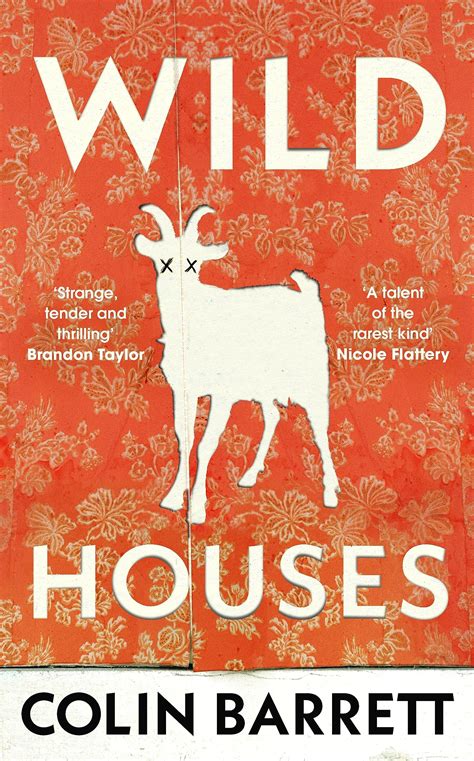
Wild Houses by Colin Barrett. Set in a small town in County Mayo (Ireland), this novel (on the surface) is a fast-paced yarn that reminded me of the films and plays of Martin McDonagh, especially The Banshees of Inisherin and In Bruges. Advertised as a caper, it tells the tale of two small-time drug-dealers kidnapping the younger brother of another small-time drug-dealer (for unpaid drug money) and the desperate attempts to rescue the kidnapped youngster. All of the characters are somewhat pathetic in some way, bringing humour and pathos into the telling. But it is also a beautiful feat of characterisation, with two ‘outsiders’ being drawn especially vividly by Barrett. They are Dev (a gentle giant whose house is being used without consent for the kidnapping) and Nicky (the younger brother’s girlfriend who is key to rescuing him but also on the verge of ‘bigger things’ at Trinity College in Dublin). These are the characters that you really feel for. Each character in the book is also surrounded by family, with almost all mothers and fathers being either dead or absent. But dead or absent, they appear to control their sons and daughters in some way, especially the mothers. Barrett is also a master of dialogue, with much of the action being propelled forward beautifully through tight character interactions. I can already see this Booker-longlisted novel as a thrilling, humorous but somewhat despairing screenplay in the tradition of McDonagh. I look forward already to viewing it.
Edith Holler by Edward Carey. This is a macabre and menacing fairy-tale for adults – the wicked step-mother of Cinderella; the lost children of Peter Pan; the giant of Jack and the Beanstalk – vividly brough to life (in both words and illustrations) as only Edward Carey can do. But as macabre and menacing as the tale is, you can’t look away. This is partly because the novel is also a love letter to theatre (set entirely within a grand Victorian theatre with its cast of theatre stalwarts: the actor-manager; the leading and supporting actors; the stage manager; the front-of-house manager; and many more) as well as to the medieval city of Norwich (Carey’s home town). But it is also an attempt by the titular character (12-year-old Edith; daughter of the actor-manager) to make sense of not only her enclosed life within the theatre, but also the mysteries of Norwich life as she attempts to research, write and present a play about the city. It is almost as if life – and the creative process – are being viewed through the reflection of a warped fun-fair mirror. Yes, it’s possible to read the greedy and tyrannical antics of many of today’s world leaders into the plot; but I just saw it as a hugely enjoyable and imaginative romp with the darkest of underbellies holding it together. I read this book because I loved Carey’s Little so much; it did not disappoint me.
The Proof of My Innocence by Jonathan Coe. Reading this novel was hugely enjoyable. On one level, it reads like a Hercule Poirot or Miss Marple who-dunnit. But underneath the Agatha Christie veneer, Coe presents a diverse bag of tricks. Tricks about facts vs. fiction, about reality vs. unreality, about language (even the novel’s title can be interpreted in several ways) and about the writing process itself. Set firmly within an identified political time period (the rise and fall of Liz Truss as Prime Minister) but with a myriad of flashbacks, and set principally around Cambridge colleges, characters of all political persuasions abound and interact. There are unexplained deaths galore as sinister event after event occurs. But there is also a light-heartedness to it all (what is really going on?) that makes the plot almost laugh-out-loud at times. It could be read as a state-of-the-nation novel or even as an attack on political extremism (with Trump popping in towards the end); but I read it as a wild ride and a romp that had me thinking from time to time. I highly recommend this novel, as I do all novels by Jonathan Coe.
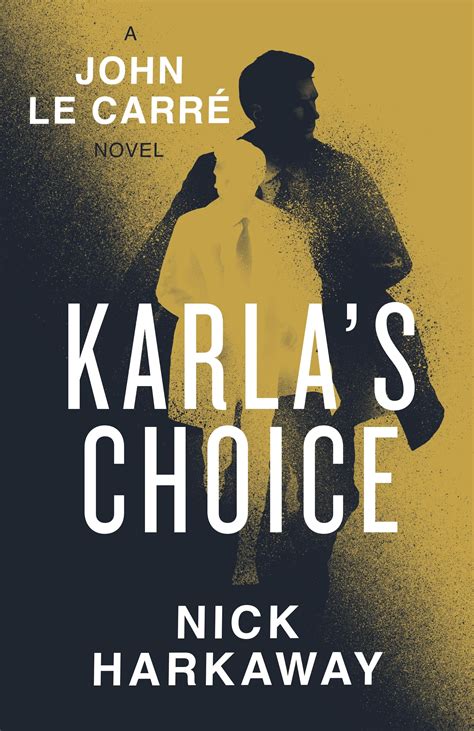
Karla’s Choice: A John Le Carre Novel by Nick Harkaway. In the 1980s I asked New Zealand author Maurice Shadbolt who he regarded as the ‘greatest living writer of fiction’ as part of a research project that I was undertaking. To my surprise (I was expecting William Golding or Iris Murdoch or Graham Geene), he nominated John Le Carre. So I began reading him avidly. He died in 2020, but his legacy still lives in this novel written by his son Nick Harkaway and subtitled ‘A John Le Carre Novel’. Not only does it fill in some of the missing pieces about Le Carre’s most famous character and his world of espionage at the Circus/MI5, but it is written with Le Carre’s exact panache. Moving from London to Berlin to Vienna to Budapest to Lisbon, and including Le Carre’s usual cast of British, German and Soviet agents and double agents, you would swear that you were reading the ‘missing’ novel between The Spy Who Came In From the Cold and Tinker Tailor Soldier Spy. It is a blend of reflection, contemplation and fast-paced action. Yes, I was left with a few ‘what actually happened?’ moments as actions unravelled towards the end. But I am already looking forward to the next instalment to discover some more answers.
Oromay by Baalu Girma (translated from Amharic by David DeGusta and Mesfin Felleke Yirgu). I decided to read this novel (written in 1983 but only just translated into English) because it is set in Ethiopia, and I know very little about Ethiopia, especially Ethiopian politics and the civil war that led to the establishment of Eritrea. I’m very pleased I made this decision. Narrated by Tsegaye (a likeable and very hard-working journalist), it depicts the ruling socialist junta’s invasion of neighbouring Eritrea. It is fiction as reportage and it is almost as if Tsegaye is filming a documentary of the invasion with all its political machinations (who’s on who’s side?) and blood-thirsty encounters. Set between Addis-Ababa and Asmara, it is intricately plotted, fast moving and vividly told. It includes some romantic excursions that I felt at first rather intruded on the main thrust of the novel but soon realised were an intricate part of its message. Its publication in 1983 unfortunately led to the ‘disappearance’ of its author, presumably by the ruling junta that did not like to see its antics depicted so glaringly. I recommend this classic novel, especially for readers of political thrillers.
The Years by Annie Ernaux (translated by Alison Strayer). This is an extraordinary personal narrative, quite unlike anything I have read before. On the surface, it is simple. It tells of a French woman’s life from birth in 1944 to the date of original publication of the novel in 2006. We learn of her working-class, Roman Catholic, provincial childhood; her discovery of intellect and ideas through university and teacher training; her marriage and role of mother to two sons; her time as a teacher; her divorce and gentle move into middle-life; her premonitions of old age. Through the clever use of ‘she’ rather than ‘I’, connections to everyman/woman are deftly made throughout. But from time to time, ‘she’ becomes ‘we’ as she encompasses her private and personal world into the context of the wider world – whether it be the Algerian war; the student demonstrations of 1968; the rise and fall of French presidents; the collapse of the Berlin Wall and communism; the explosion of modern technology; the terror of 9/11 and subsequent wars; even the emergence of contemporary books, songs or movies that were important in the day. But the irony of the novel is that it is also about a woman making notes for a telling of ‘her’ and ‘our’ story – as she says, “By retrieving memory of Collective Memory in an individual memory, she will capture the lived dimension of History” – and, of course, this is the History that Annie Ernaux has written. I chose to read this book for three reasons – I love reading French novels; it has been translated into an acclaimed play that I will get to see in London next month; Ernaux won the Nobel Prize for Literature in 2022 – and I am so pleased I did. I found this book to be both emotionally and intellectually very satisfying. I just wish that it was possible to move it on to 2024 with the main character turning 80. What would she have made of Macron, Le Pen and especially Trump?
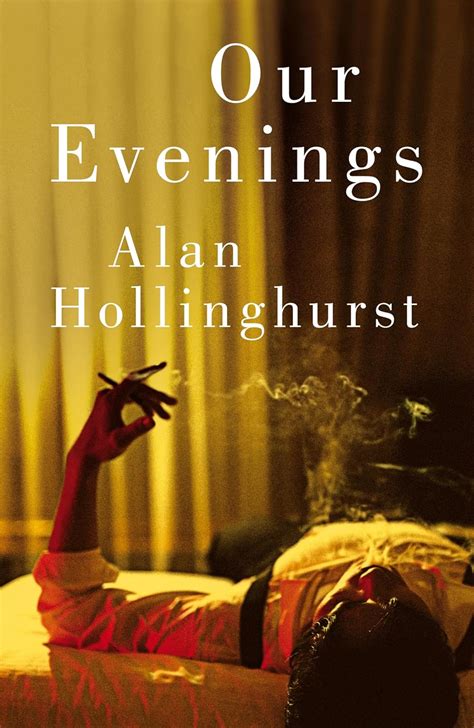
Our Evenings by Alan Hollinghurst. This wonderfully told novel is very very moving. Narrated mainly by its protagonist – Dave Win, a gay English Burmese actor – it spans his life (as a son, friend, lover, actor and renaissance man) from school in the 1980s to middle-age during the first Covid lock-down. But it is more than a personal tale – it is also a state-of-the-national novel with its changing but sometimes stinging depictions of racism, homophobia and classism along the way. But it’s the personal aspects of the novel that moved me the most – Dave’s slow discovery of his sexuality, his passion for theatre and music and journey to becoming an actor, and above all, his beautiful relationship with his mother and her same-sex partner. Hollinghurst is an exquisite writer with a keen eye for strategically chosen detail. He is like a landscape artist who not only paints the details vividly but brings the pieces together beautifully. The New York Times reviewer (who compares Hollinghurst to E.M. Forster and Henry James) concluded his review of the novel by stating that “Our Evenings is that rare bird: a muscular work of ideas and an engrossing tale of one man’s personal odyssey as he grows up, formed in exquisite language and surrounding us with a Wall of Sound”. I would concur whole-heartedly with this conclusion, and I highly recommend this outstanding novel.
All Fours by Miranda July. This is an extraordinary novel, all about a pre-menopausal woman coming to terms with her life. She sets off on a ‘voyage of discovery’ (from LA to New York) – leaving behind her husband and non-binary child – but only gets as far as the outer suburbs of LA where her quirky adventures begin. They include re-decorating a motel room that doesn’t belong to her, entering into vividly described sexual affairs with assorted men and women, and ultimately learning to re-define marriage and parenthood. Her best friend tells her that the most stable position in life is to ‘be on all fours’ because you cannot be knocked down (hence the title of the book) and her ultimate aim is to ‘land on all fours’. It is laugh-out-loud at times; sometimes very shocking; but also very moving, especially when one learns of the circumstances of her child’s almost fatal birth. I’m surprised that I enjoyed this book – some of my friends have given up on it – and I wondered if I would enjoy and appreciate it even more if I was the same gender or age as the unnamed narrator. But I think I understand why the New York Times nominated it as one of their five best novels of 2024. It’s one of those books that everyone should have an opinion of.
Glorious Exploits by Ferdia Lennon. This is a very enjoyable novel to read. Set in 412 BC in Syracuse (on the island of Sicily), the Sicilian army has conquered an invading Athenian force and enslaved the vanquished Athenians in a local quarry. Within this context, two Sicilian potters become obsessed with the works of Euripides and set about mounting productions of Medea and The Trojan Women using some of the enslaved Athenians as actors. It is both amusing and moving. Amusing in that the author is Irish and puts many Irish idioms into the mouths of the main characters as well as making many of the key actions laugh-out-loud comic; but moving in that the main actions (including the comic ones) are always surrounded by death and destruction. Reflecting Greek drama of the day, the surface is comedy but the underbelly is tragedy. The novel is mainly about the power of performance and story-telling but comedy often turns into tragedy. This is an engrossing comic novel, but one that demands continual reflection.
The Land in Winter by Andrew Miller. This is a quiet, reflective and very engrossing novel that had me fully engaged until the end. Set in the UK’s Big Freeze of 1962-3 (Britain’s coldest winter since 1739), it is a tale of two young couples’ lives in rural Somerset – one, a young doctor and his wife from the London art scene; the other, a very naïve young farmer and his wife who was formerly a hostess in a seedy Bristol club. Both women are pregnant and this is the basis of a friendship. On the surface, the novel would appear to be a very engaging domestic drama as issues of friendship, class, ambition, fidelity/infidelity and misogyny arise. But the storm that envelops the happenings signals that much darker issues are at play under the surface. As lives appear to be threatened and marriages seem to be splitting, links with the Holocaust start to seep through. This is a beautifully written novel of ideas as well as actions with beautifully drawn characters and I recommend it highly. I look forward to reading Miller’s earlier novels.
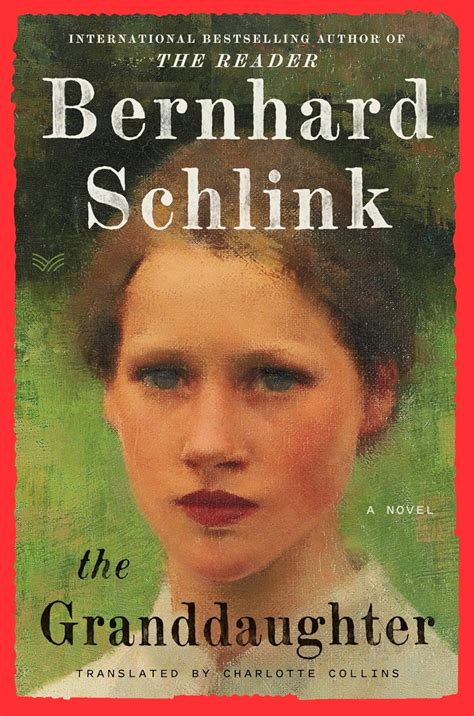
The Granddaughter by Berhhard Schlink (translated by Charlotte Collins). I enjoyed reading this novel very much. Translated from German, it is a page-turner on one level but also a serious look at the state of the German psyche, especially after the fall of the Berlin Wall. Upon discovering (from an unseen manuscript) that his recently deceased wife had given away a new-born baby girl, Kasper (a liberal and cultured book-seller) sets out to find the girl his wife felt guilty about and, in doing so, discovers a ‘new family’ (daughter; son-in-law; granddaughter) that is opposite to all that he represents: neo-Nazis who are not only anti-immigrant but also Holocaust deniers and believe that violent revolution is necessary and inevitable. The tension arises because Kasper senses an opportunity to provide an alternative future for the granddaughter. In today’s world of the far-right’s increasing dominance, this becomes a very frightening situation. Yes, it is full of pot-holes – how is Kasper actually able to take possession of the girl from her parents? – but it had me thinking and anticipating all the way through. I had to find out what happened.
What do you think? Share your thoughts...