
This update is all about the fiction I’ve been reading over the past two months. Why just reading? Because this is the time of the year when nominations for major literary awards (such as the Booker Prize and the American National Book Award) emerge, and as a serious reader, I feel obliged to read as many nominated novels as possible (especially those on shortlists) so that I can join in conversations as appropriate and have an opinion!!
I’ll discuss these books in alphabetical order, by author:
BOOKS
Headshot by Rita Bullwinkel. Longlisted for the Booker Prize 2024. I read this novel because it had been received so generously by so many international critics. But I’m not sure why – it never fully engaged me – but maybe I am the wrong reader for it. In concise but quite poetic terms, it tells the story of eight teenage female boxers, all competing for the Daughters of America Boxing Cup in a run-down gymnasium in Reno over the period of a weekend. As each boxing bout is described, the author takes you not only into what is happening in the bout (who lands what punches) but also what has happened to each girl before the bout as well as intimations of what will happen to them for the rest of their lives. Yes, it’s fierce and vibrant; and yes, I can understand why others have responded so favourably to it. But it did not hit me.
Brotherless Night by V.V. Ganeshananthan. Winner of the prestigious Women’s Prize for Fiction 2024. Set in the early days of the Sri Lankan civil war, this is an incredibly powerful novel. It is like a documentary – a work of non-fiction – as it takes you into the intimate and also devastating world of its main protagonists, mainly Tamil Tigers and their sympathisers, but also civilians caught in the literal and metaphorical cross-fire of the war. Narrated by Sashi (a young Tamil woman training to be a doctor), it takes you into both her family life (especially the lives of her brothers who joined the Tamil Tigers) and her friends and teachers’ lives. But it is not one-sided. Although drawn to the Tigers by both birth and inclination (she witnesses the anti-Tamil riots and massacre of 1983 near the beginning of the novel), she eventually realises that no one side of a conflict is totally blameless. And she feels compelled to report on this. As she reports in detail, the novel burns with outrage and passion. At times I wanted to stop reading, but this would have been like looking away from a situation that has to be confronted. Just like the current war in Gaza. I highly recommend this novel and am not at all surprised that it is a major prize-winner.
Orbital by Samantha Harvey. Shortlisted for the Booker Prize 2024. If you are deeply interested in outer space, this short but dense novel will probably engage and fascinate you. Unfortunately, I’m not. It depicts a day in the life of six multi-national astronauts orbiting the earth on a fact-finding mission. One day involves 16 orbits of the earth which is suggested by 16 chapters. Characters note the beauty of the world from outer space, reflect on their connections to earth and think about wider earth-space connections. I did find some of the wider connections fascinating – the timeline of evolution; the realisation that political boundaries are meaningless from outer space; the tension between the beauty of space travel vs. the chaos of earth – and this occasionally alleviated quite a strong feeling of repetition within the novel for me. But, despite its beautiful telling, this novel did not engage me as I would imagine that it might engage others.
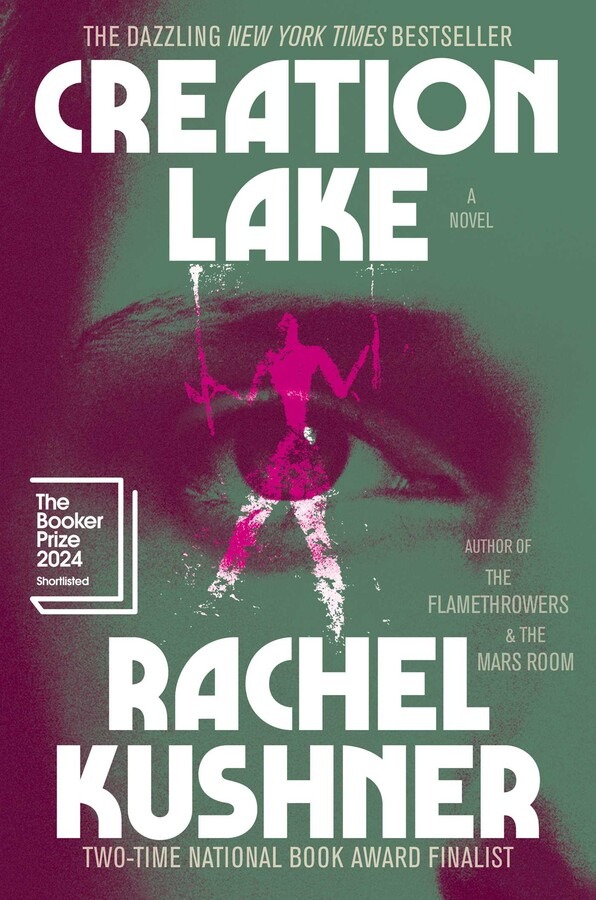
Creation Lake by Rachel Kushner. Longlisted for the National Book Award 2024 and shortlisted for the Booker Prize 2024. Being an erudite novel of ideas – ideas about climate, about the evolution of man, about eco-terrorism, even about mysteries of navigation and possible directions for the future – I was nervous that this book would be little more than an extended treatise on contemporary thinking. But how wrong I was. Ultimately, this is an espionage thriller set in the south-west of France in which Kushner cleverly merges these ideas into a thrilling and fast-moving plot involving a free-lance American undercover agent (Sadie Smith) infiltrating a commune of radical eco-activists on behalf of an unknown ‘employer’. To what end? one constantly asks. Think John le Carre meets Jean-Paul Sartre. Think also Eleanor Catton’s Birnam Wood which links thematically to this novel. The abstract meets the real world as ideas weave into a well-controlled and engrossing plot. I loved this beautifully written novel.
My Friends by Hisham Malar. Longlisted for the Booker Prize 2024 and shortlisted for the National Book Award 2024. This beautifully written and very moving novel is about exile and treason, but above all it is about friendship, love and comradeship and the spirituality that holds them together. Beginning in earnest on the day that Libyan students living in the UK demonstrated against Gaddafi outside the Libyan embassy in London, it tells the story of three who attended that demonstration (two of whom were shot by Gaddafi agents from within the embassy) and become the closest of friends afterwards. They pour out their feelings for their homeland; they fret over the fate of their families left behind; they work hard at making lives (and loves) for themselves in a land of exile; they disagree (sometimes profoundly) about actions that need to be taken to make sense of their lives. When the Arab Spring finally arrives, they approach their fate (and the fate of Libya) in very different ways. But it is also a novel about London as the narrator (Khaled) walks circuitously to Shepherd’s Bush from King’s Cross Station (over the period of a day) where he has just farewelled Hosam who he is unlikely to meet again. London, as a city, has held these three exiles together for decades. Time sometimes crawls in the novel; it sometimes leaps forward; but it ultimately leads to a conclusion that I found deeply satisfying.
Held by Anne Michaels. Shortlisted for the Booker Prize 2024. I really enjoyed – and appreciated – the first two thirds of this impressionistic and evocative short novel. Spanning 1908-2025 but in no particular order of years, and set across Europe but mainly in the UK, I could make links between the various characters, story points and even images that seemed to hold this book together – and I enjoyed doing so. I think I got Michaels’ major points about love, memory, grief and connections. And, in fact, some of the characters’ stories really moved me. But I found it hard to make links between the first two thirds and the final third. New characters and story lines suddenly emerge amidst lots of philosophical and scientific musings – Marie Curie suddenly becomes a key character – and I worked really hard at making links with what I had previously read. But to little avail. If this novel actually wins the Booker Prize, I will probably read it again for insights that might have eluded me.
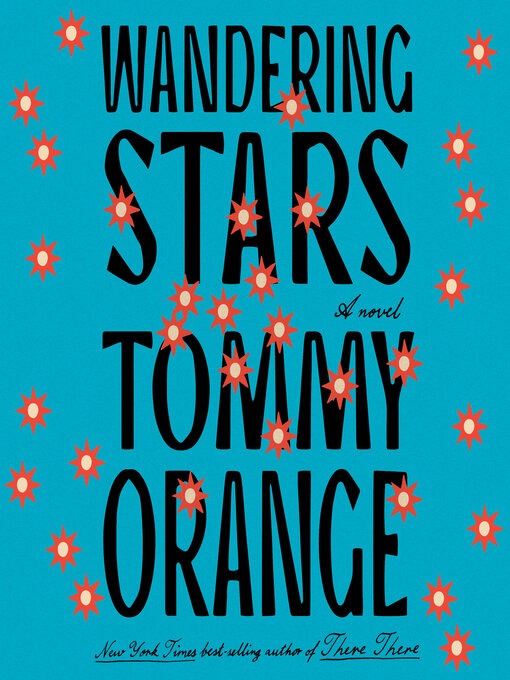
Wandering Star by Tommy Orange. Longlisted for the Booker Prize 2024. This very powerful novel begins with the 1864 Sand Creek Massacre of Cheyenne Native Americans and thereafter depicts the ongoing metaphorical massacre of Native Americans’ enforced assimilation through to the present day. Its central character is Orville Red Feather (a survivor of a gun attack depicted in Orange’s previous novel There There), but begins with chapters on Orville’s ancestors, whether they be fleeing the 1864 Massacre or incarcerated in penitentiaries or reform schools. All suffer according to the accepted edict of the time, ‘Kill the Indian, save the man’. Most of the novel, however, is devoted to depicting Orville and his brothers’ lives in Oakland, California from the 1980s onwards. As one brother explains, “You have to hit the bottom to aim for the top”. The ‘bottom’ in this novel mainly relates to addiction, whether it be alcohol or drugs. Orange is an outstanding story-teller who takes us deeply into the inner and outer lives of all of his main characters (but mainly Orville) as they struggle to move to the ‘top’. His language is a beautiful blend of sharpness and poetry. I am not surprised that Tommy Orange is now being acclaimed as a leading chronicler of the Native American experience.
The Safe Keep by Yael Van Der Wouden. Shortlisted for the Booker Prize 2024. Set in the Dutch countryside just 15 years after the end of World War II, this intense and sometimes thrilling novel is ultimately a story about lies – the lies that individuals tell to themselves and sometimes to each other; the lies that families tell as mechanisms for self-protection; the lies that countries tell because of a sense of collective guilt. The last lie – arguably the most significant within the context of this novel – relates to the way that Holland failed to protect its Jewish population adequately during World War II. The novel is structured in three parts – setting up the lies; confronting them at a personal level; confronting them at a wider level – and although I was always engaged, the middle section (involving the central character Isabel discovering her sexuality and generating a sensual life for herself) frustrated me somewhat in that it did not move the plot along fast enough. But the final part, when all is revealed and largely resolved, packed as powerful a punch as any I can remember in a novel from recent years.
Stone Yard Devotional by Charlotte Wood. Shortlisted for the Booker Prize 2024. This Australian ovel is a quietly powerful book that is simply but beautifully told, much in the way that American novelists Ann Tyler, Ann Patchett and (especially) Elizabeth Strout tell their tales. All portray middle-aged women trying to find meaning in their lives. In this instance, the narrator (never named) escapes her personal and professional life in the city for the simplicity and quietness of life in a convent – not for religious reasons (she is in fact an atheist) but for solitude and reflection. Three major plot points affect her life in the convent – a plague of mice; the return of a dead nun’s bones; the appearance of a woman the narrator knew from her childhood. While dealing with these plot points, the narrator reflects on episodes from her own life (almost all depicting death, grieving or despair) giving us a vivid picture of someone coming to terms with what her life is all about. This sounds depressing, but it is anything but. It is indeed totally life-affirming and very engrossing. Just as Elizabet Strout found life and hope in her suicidal character Olive Kitteridge in the novel of the same name, so Charlotte Wood finds life and hope in the beautifully detailed reflections of her unnamed protagonist. Maybe all of us need to hide away from the hecticness of life/society from time to time if we are to infuse our lives with real meaning.
What do you think? Share your thoughts...